
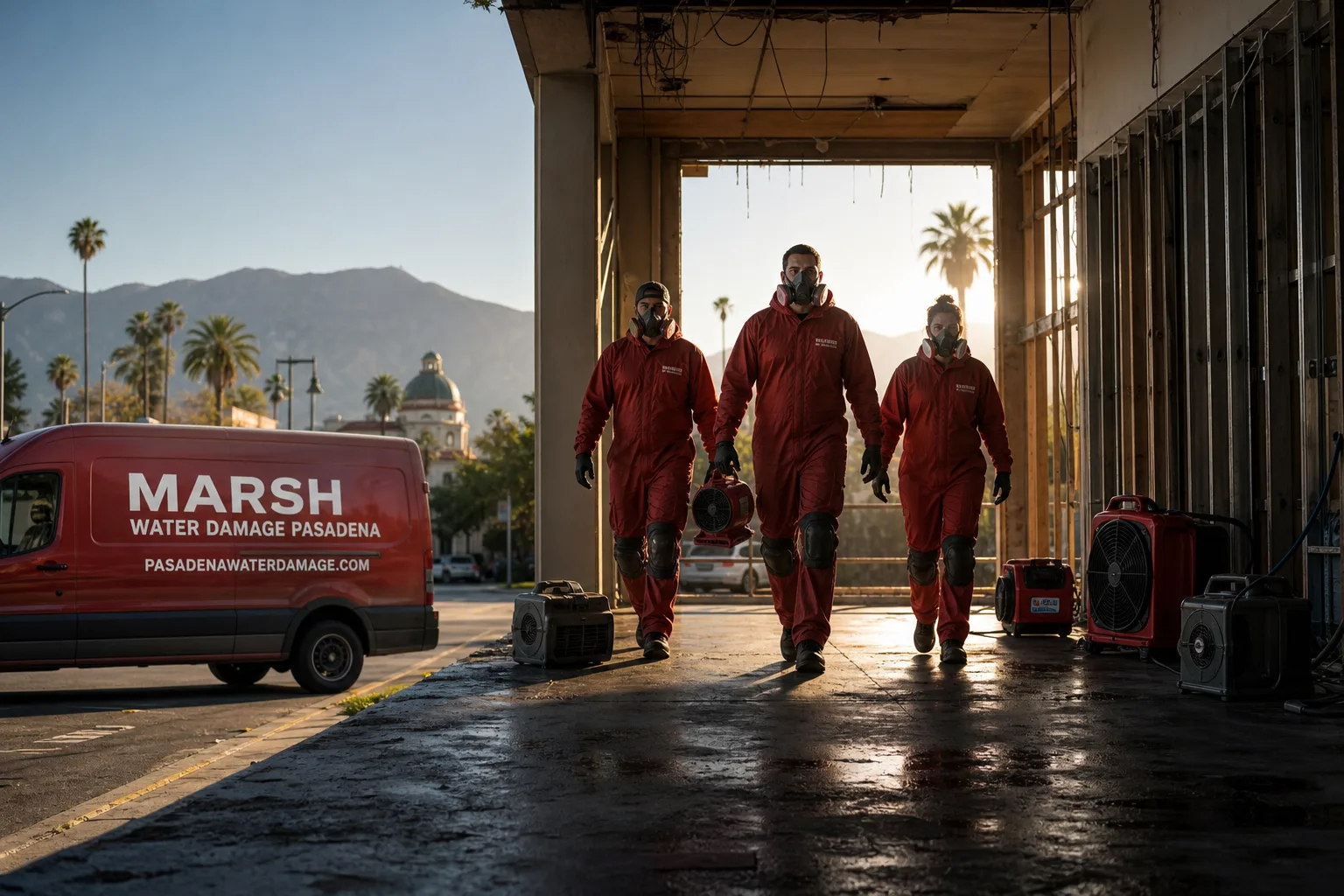
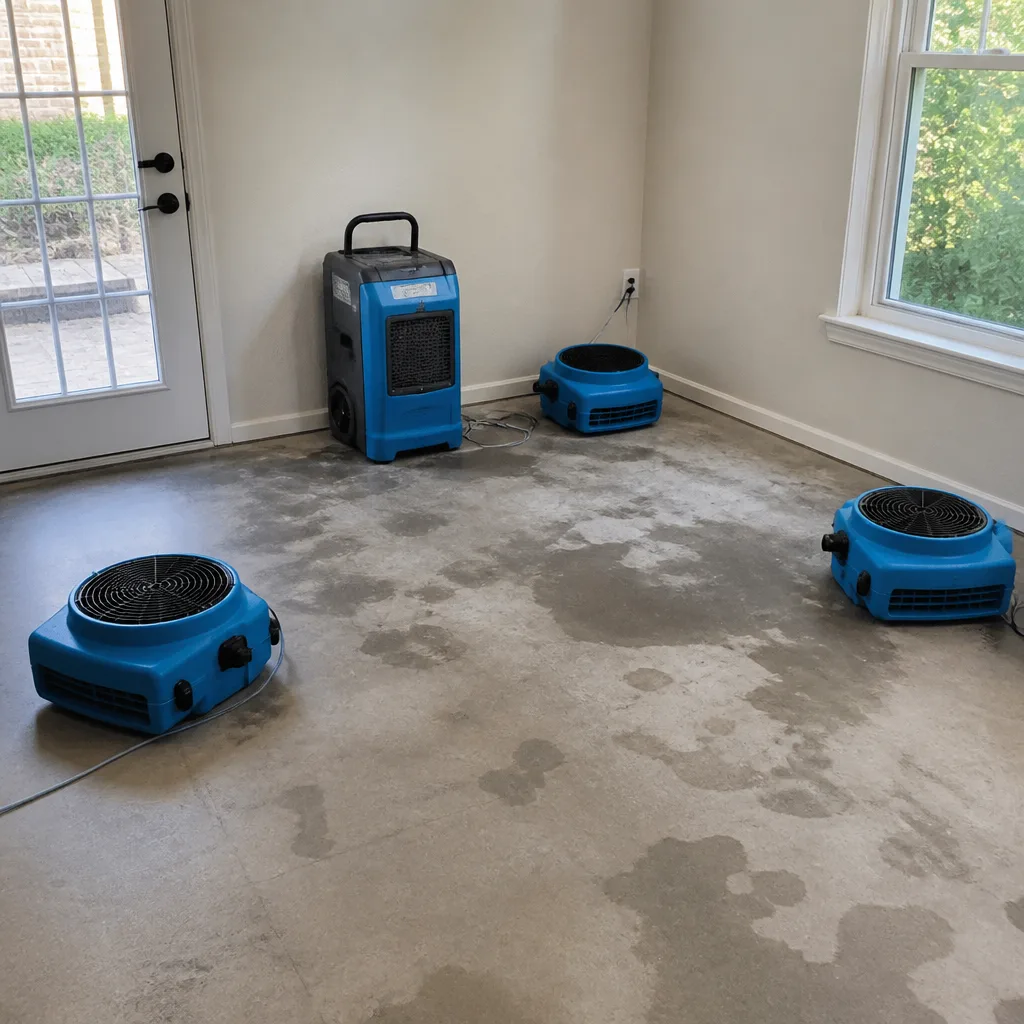
 Water damage drying
 Fire & smoke cleanup
 Mold remediation
 Storm response
 Sewage cleanup
 Reconstruction
Free visual inspection and a written scope of work before any mitigation begins - photos, moisture readings, and drying logs go in your claim file
The scope we write is the scope we bill. Anything new gets shown to you, in writing, before we touch it.
Get your free estimateFast, Reliable Storm Damage Restoration Across Temple City
Storm damage in Temple City usually means one of two things: wind-driven rain finding its way through an aging stucco wall, or a winter downpour that saturates the ground around a concrete slab foundation until water pushes up through cracks and old drain lines fail. Most residential storm water extractions in Temple City run between $3,200 and $6,800 before drying equipment is set, and we can typically have a crew on site within 60 to 90 minutes of your call. Call (626) 657-5106 any hour – a live person answers, not a voicemail tree.
We know the east side of Temple City differently than a franchise crew driving in from across the county. The original cast iron drain pipes under those 1960s slabs, the low-ventilation ranch floor plans that hold moisture against wood framing, the stucco that hides water damage until it has already been working for days. That local knowledge changes how we scope the job, how many air movers we set, and whether we treat the water as clean or contaminated from the first hour.
Our team is part of the Storm Damage Restoration division serving Temple City and the surrounding San Gabriel Valley, with every technician dispatched under the Threshold Verified standard: background-checked, identity-verified, uniformed, and sent to you by name and photo before the truck rolls.
Why Marsh Water Damage Pasadena Is Temple City’s Preferred Storm Damage Restoration Company
Temple City homeowners call us because we speak the local language of their houses. A 1960s ranch on Sultana Avenue with water coming up through the slab is not the same job as a 1990s two-story in Arcadia with roof leaks. We have pulled water out of Temple City homes long enough to know where the moisture hides: behind stucco, under original oak floors, inside the wall cavities around old galvanized supply lines that have been corroding for 60 years.
The Threshold Verified standard matters here. You will know the name and face of every technician before they arrive, and they will show a photo ID badge at your door before stepping inside. That is not a marketing line. It is a five-step verification protocol applied to every visit, and it is the reason so many Temple City homeowners who are home alone, or have young kids, or are older and cautious about who they let in, choose us over an unknown crew.
Response time to Temple City is consistently 60 to 90 minutes from your call, including nights, weekends, and holidays. A live person answers 24/7. If we tell you a crew is coming, it is a named crew with specific equipment on the truck.
Every job starts with a written price before any demo begins. No estimate that balloons after the drywall comes out. Every repair carries the 365-Day Done Right Promise in writing, with a free second visit if anything is not right within a full year. Tobias Reyner, who leads the technical team, is the one who signs off on the drying plan for slab-saturation jobs in Temple City, because those are the ones where a surface-only reading will lie to you.
Restoration work we handle
Flooded House in Temple City
A flooded house in Temple City is rarely just standing water on the floor. On the east side, where original cast iron drain lines still run under the slab, a flooded house often means Category 3 water – sewage – mixed into the storm water, and that changes everything about how the job has to be handled. Most flooded house restoration work in Temple City runs $4,000 to $9,500 when biohazard protocols, containment, and full structural drying are involved.
When the Slab Is the Problem
Heavy winter rain after a long dry spell saturates the alkaline soil around Temple City foundations. The ground swells, the slab shifts, and water finds its way up through hairline cracks that have been there for decades. If the cast iron drain pipe has rusted through at the same time, the water pushing into your den is not clean storm water – it is sewage. We set containment and treat it as Category 3 from the first hour, which means full PPE, antimicrobial application, and disposal protocols that a water-only crew would skip.
Extraction and Drying on Ranch Floor Plans
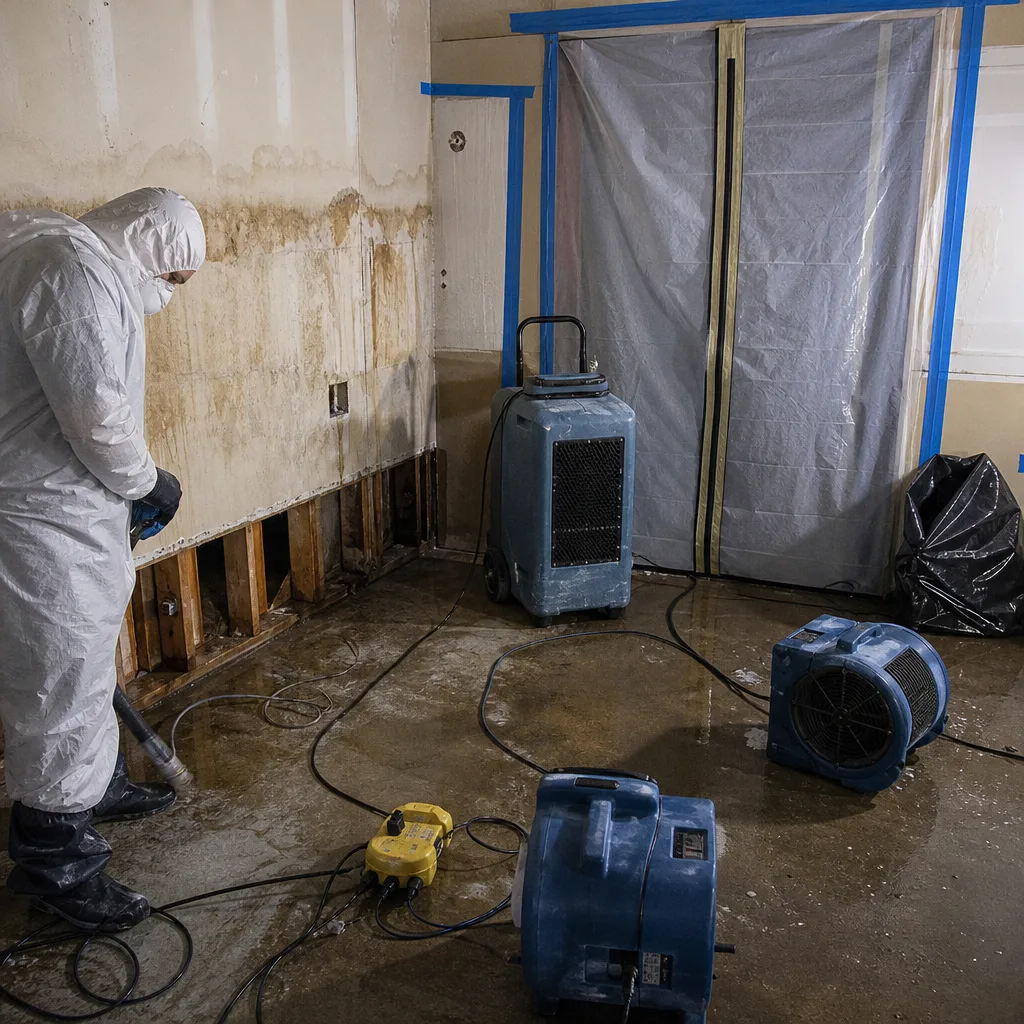
Temple City’s 1950s and 1960s ranch homes have low ceilings, long hallways, and limited cross-ventilation. That traps moisture against original wood framing and makes slow drying the biggest risk. We run truck-mounted extraction to pull hundreds of gallons out fast, then set Dri-Eaz air movers and Phoenix dehumidifiers in a pattern specific to the floor plan, with psychrometric readings (measuring the moisture in the air) taken daily to confirm the structure is genuinely dry, not just dry on the surface.
Flood Restoration in Temple City
Flood restoration in Temple City starts with one honest question: is this clean water or contaminated water? Because of the aging cast iron drain lines and galvanized supply pipes in the area’s ranch homes, we assume nothing and test everything. A typical Temple City flood restoration project runs $3,500 to $8,200, with the higher end reflecting Category 3 water, full containment, and rebuild-ready drying documentation.
Moisture Mapping Behind Stucco
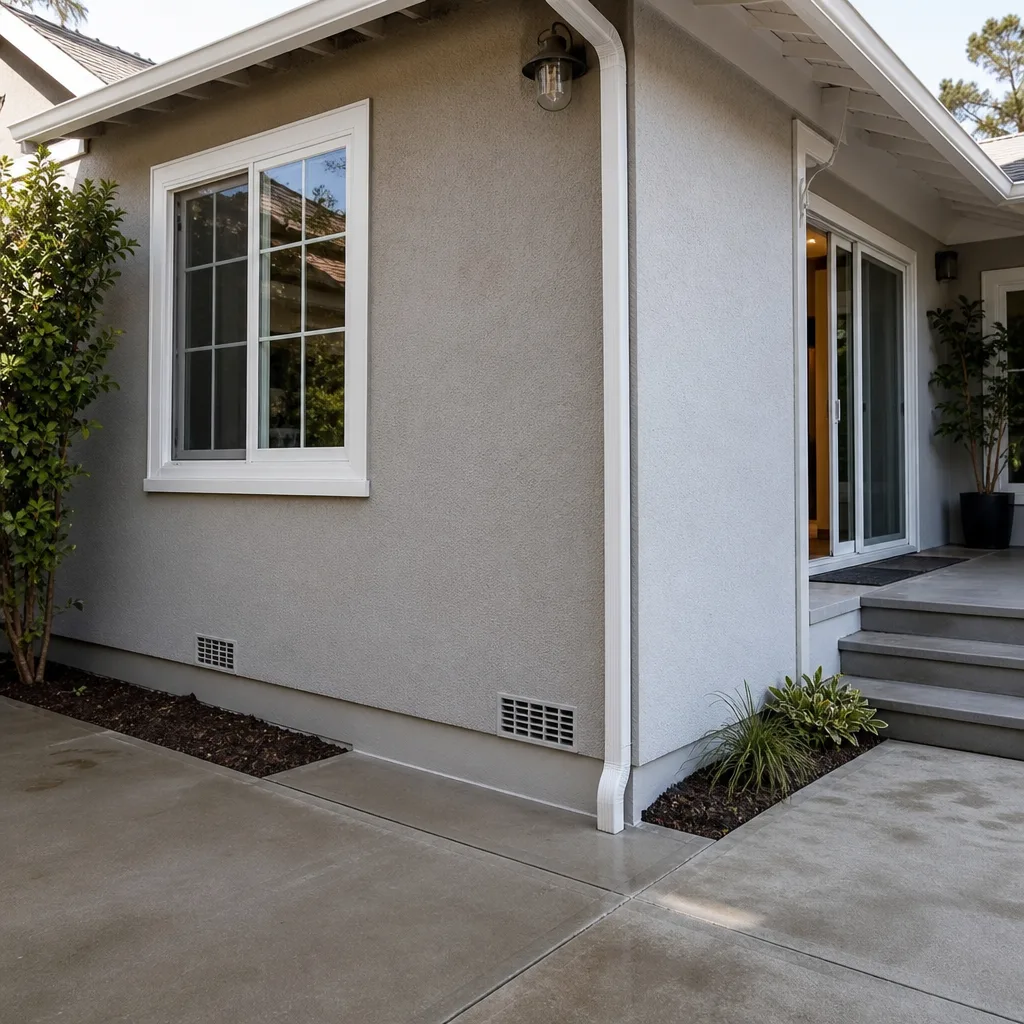
Stucco hides water damage longer than any other exterior in Temple City. Water intrusion behind the stucco layer can sit against original wood framing for weeks before the drywall on the interior shows a stain. Our technicians use moisture meters and thermal imaging to map where the water actually traveled, not just where it is visible. That is the difference between drying the wall you can see and drying the wall that is actually wet.
Drying What Can Be Saved, Removing What Cannot
Original wood framing in a Temple City ranch home is worth saving when it can be dried to pre-loss moisture content without structural compromise. We do that with Injectidry systems that pull water out of wall cavities and under floors without unnecessary tear-out. But we also tell you plainly when the drywall, carpet pad, or baseboards have absorbed Category 3 water and need to go. The written scope we agree on before work starts includes both the drying plan and the removal list, so there are no surprises mid-job.
Trusted Brands We Service in Temple City
Temple City homeowners run Dri-Eaz, Phoenix, XPOWER, B-Air, and Injectidry equipment, and so do we. If your flood restoration involves a specific piece of equipment that needs a part or replacement, we stock common components locally and can source the rest quickly for Temple City customers. We service and deploy the same commercial-grade drying tools the national franchises use on large commercial losses, applied to your 1,500-square-foot ranch on a residential street. That matters when the goal is getting the wood framing dry before mold sets in.
See the difference
 Before
 After
After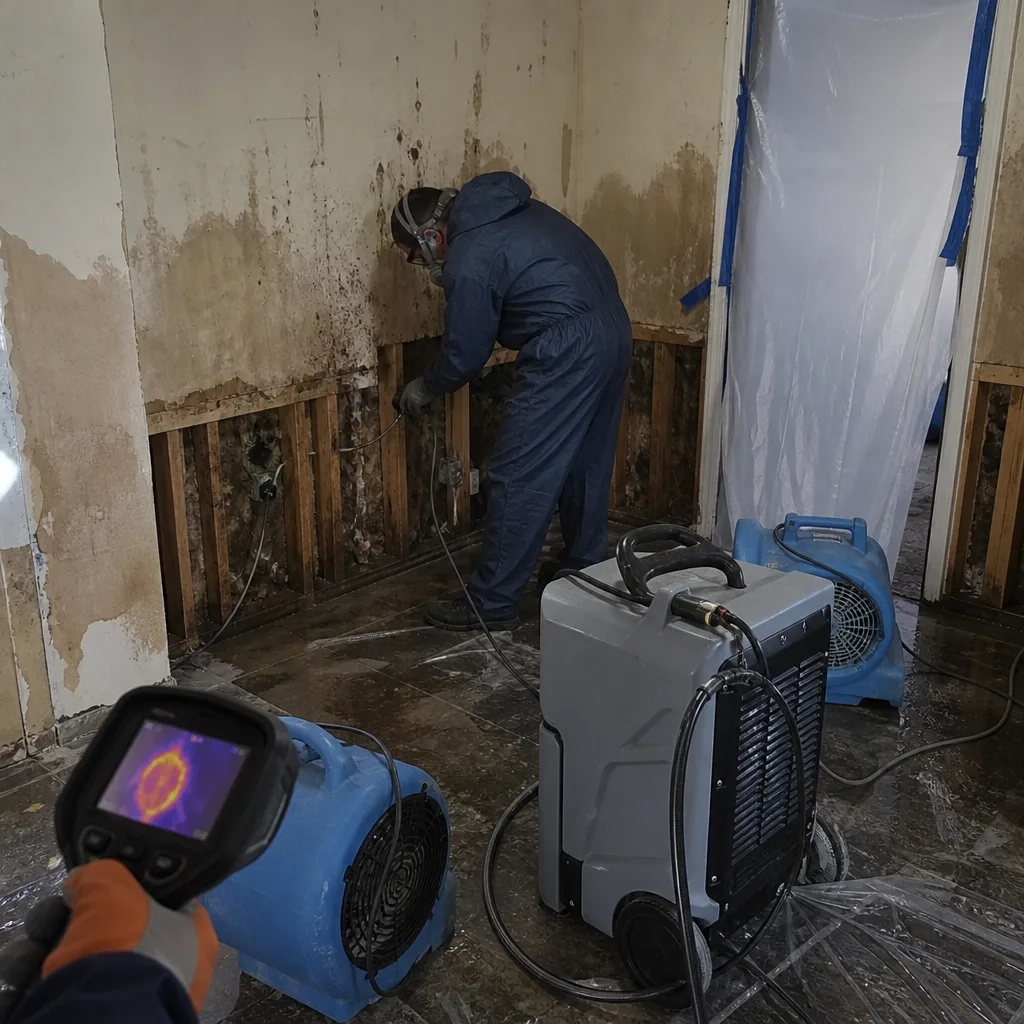 Before
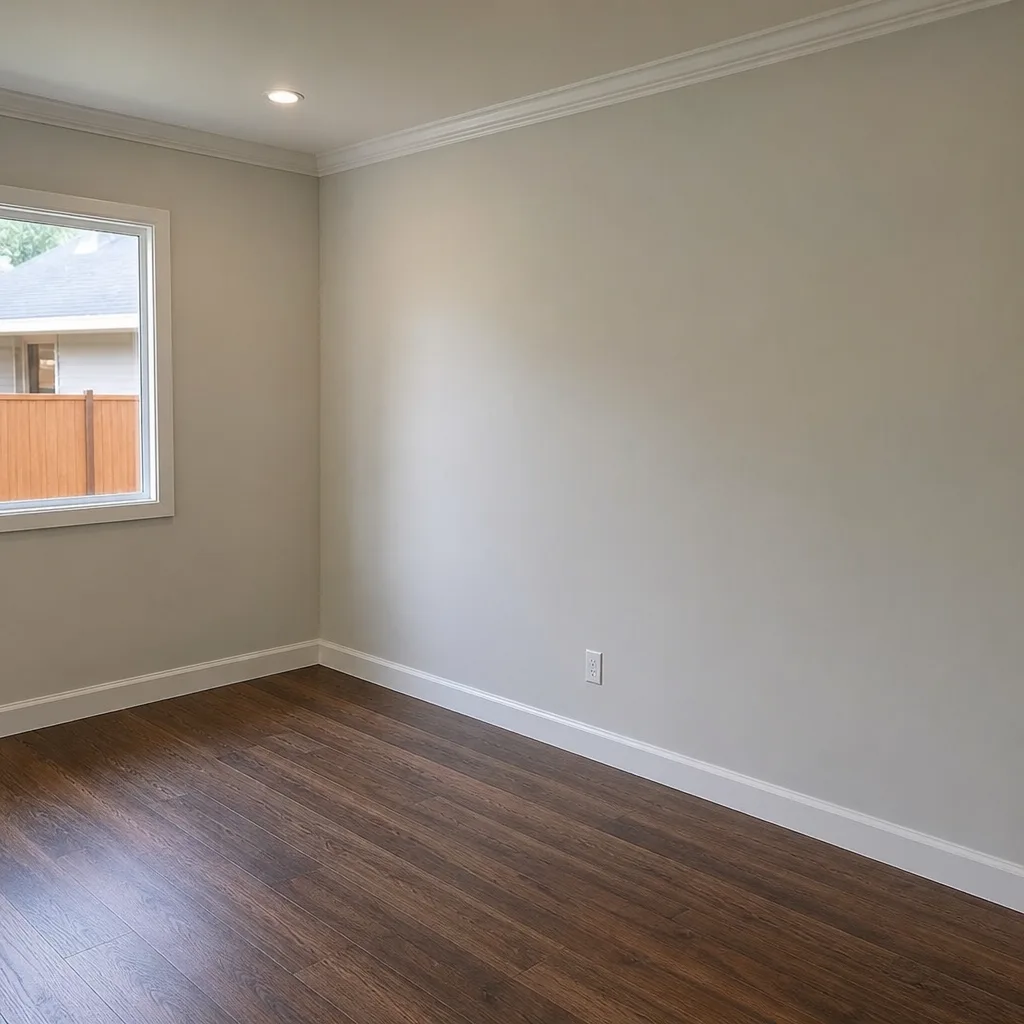 After
After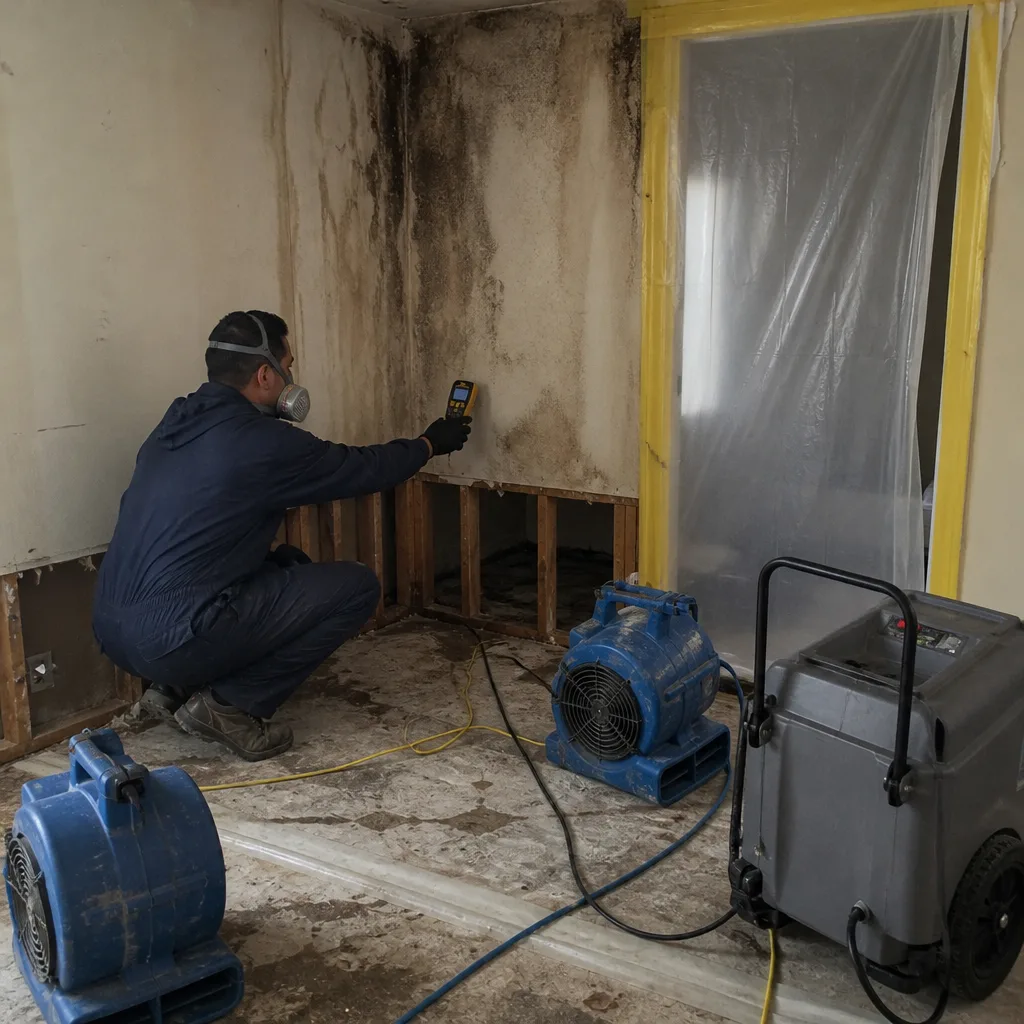 Before
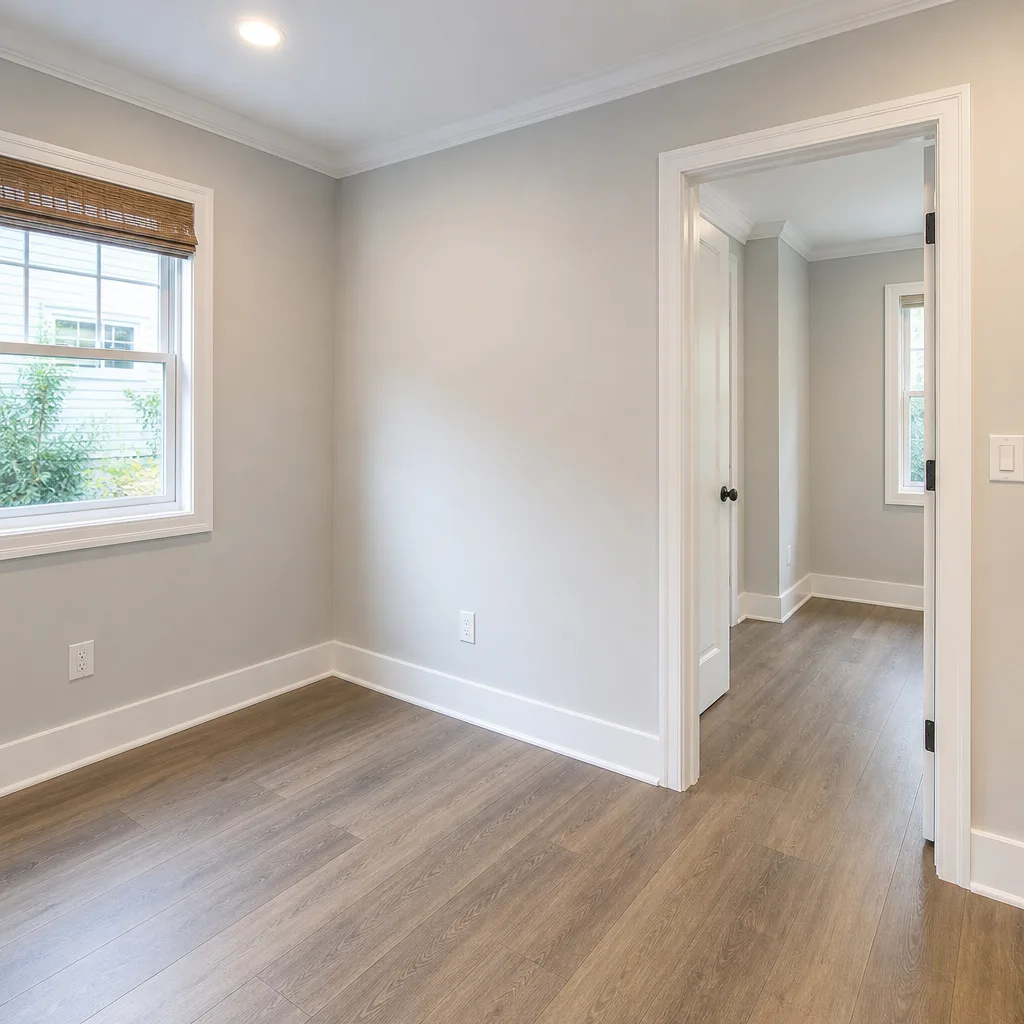 After
AfterCommon Storm Damage Restoration Problems We See in Temple City Homes
- Cast iron drain failure during heavy rain. After a February storm saturated the soil on Sultana Ave, a 1960s ranch had water pushing up through foundation cracks and a failed cast iron drain line pumping Category 3 water into the den. Our techs set containment, extracted 400+ gallons with truck-mounted equipment, ran Dri-Eaz air movers and Phoenix dehumidifiers for structural drying, and documented moisture readings daily until we hit pre-loss condition – no mold, no rebuild surprises.
- Moisture trapped behind stucco exteriors. Temple City’s stucco-and-wood ranch homes hold water in wall cavities where surface readings stay dry. We moisture-map every affected room to find what you cannot see from the outside.
- Galvanized supply line corrosion. Many of the area’s original galvanized water lines have been corroding for 60 years. When one lets go during a storm season, the leak often occurs inside a wall or under the slab, not where you can see it.
- Category 3 water mistaken for clean storm water. We see this too often: a homeowner or a less experienced crew treats a sewage-mixed flood as if it were clean rainwater. The biohazard protocols are skipped, the antimicrobial application is missed, and the drying plan is wrong. In Temple City, with cast iron drain lines still in the ground, we test first.
Pricing for Storm Damage Restoration in Temple City, CA
Storm damage restoration in Temple City runs $3,200 to $9,500 for most residential jobs, depending on the water category, the square footage affected, and whether biohazard protocols are required. A straightforward clean-water extraction in a single room with drying equipment typically lands around $3,200 to $4,800. A flooded house with Category 3 water, containment, full extraction, and structural drying usually falls between $5,500 and $9,500. The variables are the size of the affected area, how long the water sat before we arrived, and whether original cast iron drain lines are involved. You will get a written price before any work starts, and that price does not change unless you approve a change in scope in writing. Call (626) 657-5106 for a free estimate – a live person answers.
We Also Serve Cities Near Temple City
Storm Damage Restoration in Temple City is our focus, but our crews regularly handle jobs in nearby El Monte, San Gabriel, Arcadia, and Rosemead. Much of the housing stock across these neighboring cities shares the same 1950s-to-1970s ranch construction and slab foundation challenges we see in Temple City, so the equipment and drying approach translate directly. If you are in one of those cities and dealing with storm damage, call the same number: (626) 657-5106.
Serving Temple City, CA - Our Local Coverage Area
We’re based in the Temple City area and know this community well. Use the map below to see our service coverage - if you’re nearby, we can almost certainly help.
FAQs About Storm Damage Restoration in Temple City
Mold can begin colonizing wet drywall within 24 to 48 hours in Temple City’s climate, especially during warm, wet winter periods when indoor humidity stays elevated. The clock starts the moment the drywall gets wet, not when you notice the stain. That is why we prioritize same-day extraction and structural drying on every storm damage call. Call (626) 657-5106 and a named technician will be on the way within 60 to 90 minutes.
Yes. Many east-side Temple City homes still have original cast iron drain pipes under the slab, and heavy rain can push groundwater into cracked or corroded sections, causing sewage to back up into the living space. That water is Category 3 – biologically contaminated and unsafe – and it requires full containment, antimicrobial treatment, and proper disposal. Treating it as clean storm water is the most common, and most dangerous, mistake we see. Call (626) 657-5106 and we will test before we assume anything.
We run truck-mounted extraction units for high-volume water removal, then set Dri-Eaz air movers and Phoenix dehumidifiers in patterns designed for the low-ventilation, long-hallway floor plans typical of Temple City ranch homes. For water trapped in wall cavities and under floors, we use Injectidry systems that pull moisture out without unnecessary tear-out. All equipment is the same commercial-grade gear used on large losses, operated by technicians credentialed through IICRC, RIA, and IFA.
We make that call based on the water category, the length of saturation, and the material involved. Clean storm water on tile or concrete usually dries in place. Category 3 water on drywall, carpet pad, and baseboards means removal – those materials cannot be reliably sanitized. Original wood framing can often be saved with aggressive drying and moisture monitoring, and we will show you the moisture readings that support the decision either way. Everything is documented in the written scope before work starts.
Usually yes, if the water is caught and drying starts within the first few days. Original Douglas fir framing in Temple City ranch homes is dense, stable, and dries predictably when the drying plan is aggressive enough and the moisture readings are taken daily. We use Injectidry systems to pull water from inside wall cavities and under plates, and we track psychrometric readings until every framing member hits pre-loss moisture content. Tobias Reyner personally reviews drying logs on slab-leak jobs to confirm the numbers before we sign off.
Written by Tobias Reyner, Owner at Marsh Water Damage Pasadena, serving Temple City.