

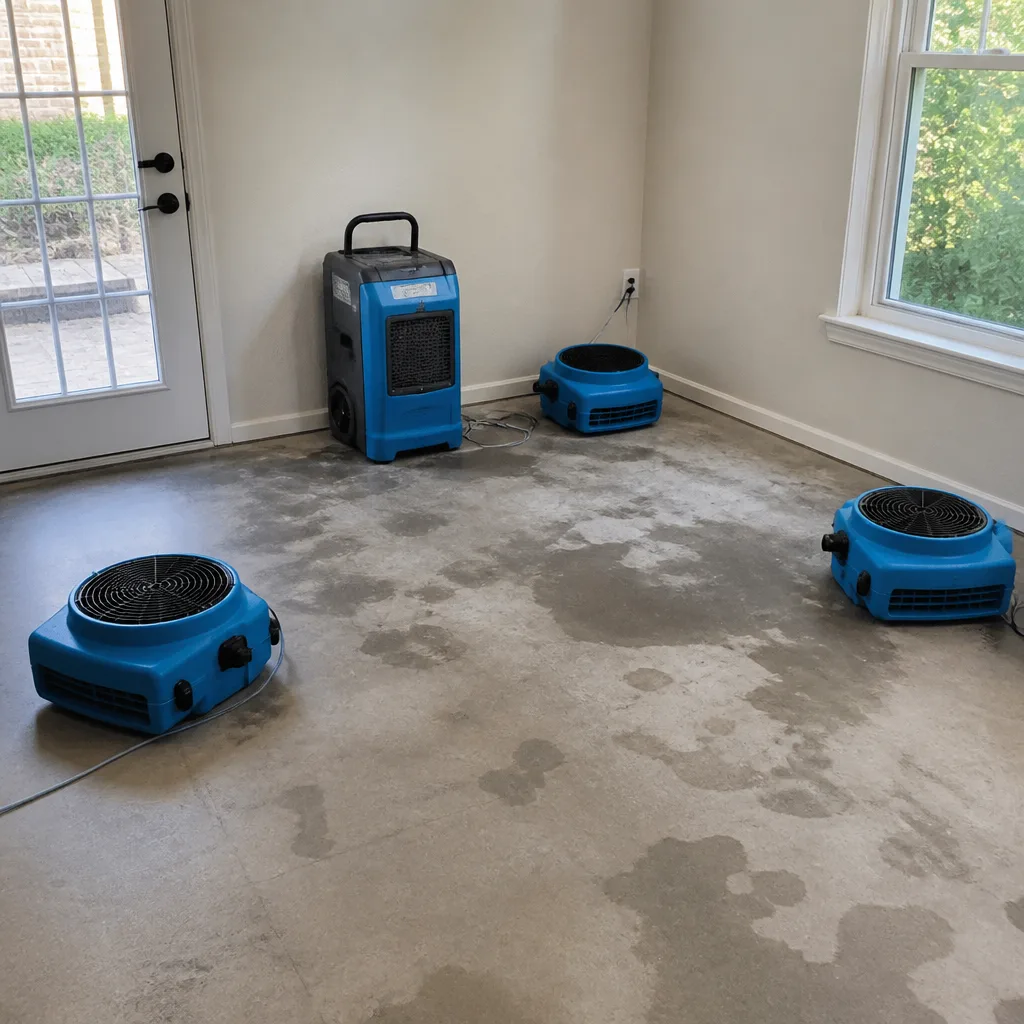
 Water damage drying
 Fire & smoke cleanup
 Mold remediation
 Storm response
 Sewage cleanup
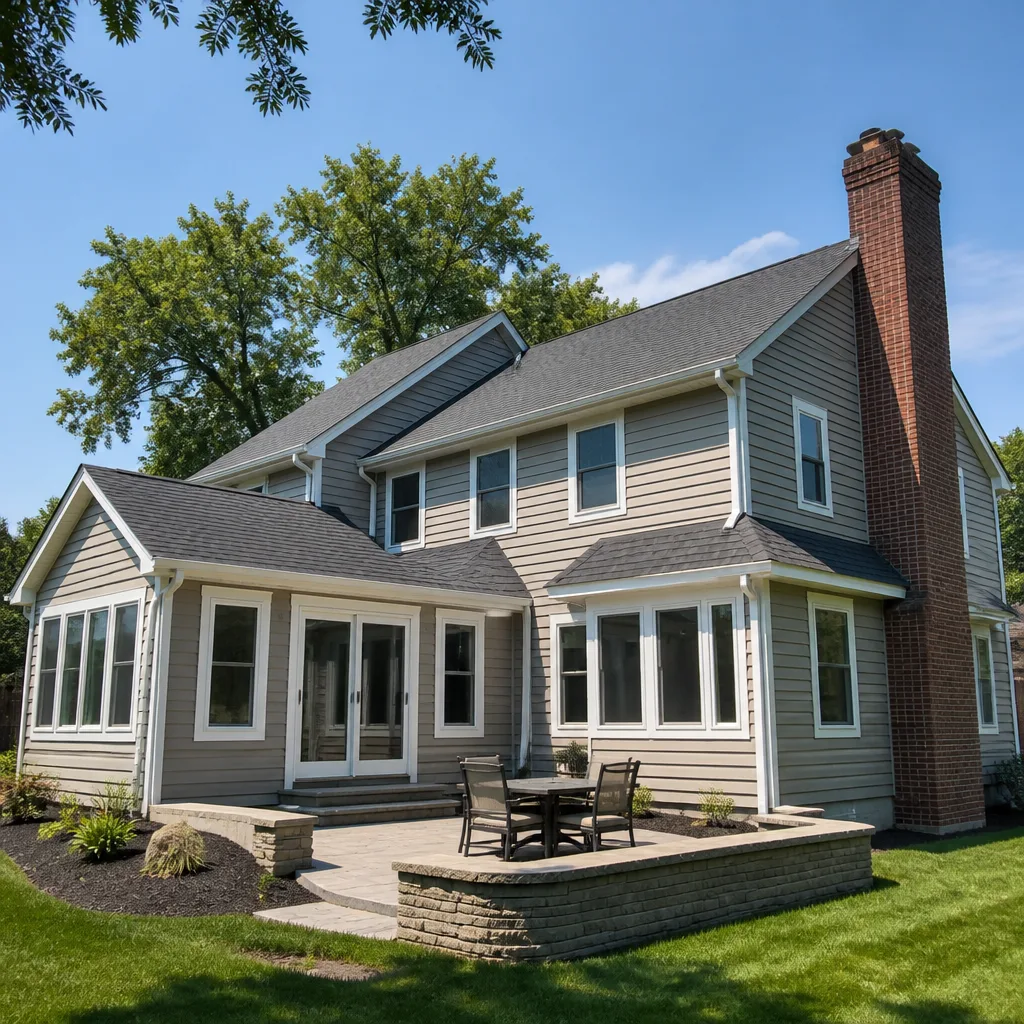 Reconstruction
Free visual inspection and a written scope of work before any mitigation begins - photos, moisture readings, and drying logs go in your claim file
The scope we write is the scope we bill. Anything new gets shown to you, in writing, before we touch it.
Get your free estimateFast, Reliable Storm Damage Restoration Across La Crescenta-Montrose
Storm damage in La Crescenta-Montrose rarely means just standing water. It means mud, sediment, and debris from the Verdugo Mountains pushing into basements and crawlspaces after a heavy winter rain. Our Storm Damage Restoration team responds to foothill homes fast, typically within 60 to 90 minutes, because we know that water sitting in a 1950s raised foundation turns into mold before the weekend is over. If storm water has found its way into your home, call us at (626) 657-5106 now. A live person answers, day or night.
Why Marsh Water Damage Pasadena Is La Crescenta-Montrose’s Preferred Storm Damage Restoration Company
La Crescenta-Montrose homeowners call us because we treat storm damage here differently than we would in a flatter city. The sediment load matters. The hillside drainage matters. The age of the framing matters. Our crews work in the San Gabriel foothills regularly, so we arrive already knowing what a split-level ranch off Foothill Boulevard is likely dealing with when a drain line gives out.
Since 2005, Marsh Water Damage Restoration has operated as part of the Threshold Group family, and every tech who arrives at a La Crescenta-Montrose home follows the Threshold Verified standard. That means you get a name and a photo before the visit. The person at the door shows a photo ID badge before stepping inside. Tobias Reyner leads our team, and he insists on this for every single job. It’s not a nice extra. It’s how we work.
Our technicians hold IICRC, RIA, and IFA credentials. We run Dri-Eaz, Phoenix, and XPOWER equipment on residential jobs, the same gear used on large commercial losses. And before any work starts, you get a written price. Not a verbal estimate that changes once the drywall comes out. A printed number. That’s the Threshold Standard applied to storm damage restoration in La Crescenta-Montrose.
Restoration work we handle
Flood Restoration in La Crescenta-Montrose
Flood Restoration in La Crescenta-Montrose usually means cleaning up more than water. Winter storms send runoff down from the Verdugo Mountains, and that runoff picks up soil, ash from old burn scars, and whatever else sits on the hillside. When it enters a home, it’s category 3 water: contaminated, carrying silt and organic matter. Extraction alone won’t fix it. You need removal of debris, antimicrobial treatment on affected framing, controlled demolition where drywall or insulation has soaked through, and then structural drying.
Most residential flood restoration jobs in La Crescenta-Montrose run between $3,200 and $9,500, depending on how far the water traveled and how much sediment came with it. A simple garage intrusion on a single-story ranch might sit at the low end. A basement fill with mud and saturated insulation across a split-level runs higher. We write the scope before we start, so you see the number in print.
Hillside Runoff and Contaminated Water
Flatland flooding in Glendale or Pasadena often means relatively clean rainwater. Here, the water passes through burn scar areas and loose hillside soil. That changes the remediation protocol. We treat it as contaminated from the first minute, which means full PPE, containment barriers, and proper disposal of removed materials.
Structural Drying for Mid-Century Framing
1940s and 1950s wood framing dries differently than newer engineered lumber. It soaks deeper and releases moisture slower. We use moisture mapping, not guesswork, to confirm the studs and joists are actually dry before we close a wall back up.
Basement Flood Cleanup in La Crescenta-Montrose
Basement Flood Cleanup in La Crescenta-Montrose targets something specific: the crawlspace-to-basement transition in split-level homes. Many houses here were built with a basement on the downhill side and a crawlspace upslope. When a hillside drain overwhelms during heavy rain, water moves downhill through the crawlspace and pools in the basement. By the time a homeowner notices, mud and silt have spread across the concrete and wicked into the bottom plates of the wall framing.
Basement flood cleanup here typically runs between $2,800 and $7,000. The range depends on whether we’re extracting water only, or removing silt, damaged insulation, and saturated drywall. If mold has already started, the cost shifts upward. Our crews work quickly to stop that clock.
Sediment Removal and Disposal
Mud is heavier than water. It clogs pumps, damages flooring, and hides in corners. We shovel, vacuum, and dispose of it properly before drying begins. Skipping this step means drying equipment pushes moisture around instead of pulling it out.
Crawlspace Drying in Split-Level Homes
A wet crawlspace under a raised foundation rots slowly and invites mold into the floor system above. We place dehumidifiers and air movers under the home, monitored with moisture meters, until the joists and subfloor read dry. That’s psychrometric data, plain and simple: measuring moisture in air and materials to know when the structure is genuinely dry.
Trusted Brands We Service in La Crescenta-Montrose
We maintain and restore storm-damaged homes regardless of original builder or materials. But La Crescenta-Montrose’s housing stock leans toward mid-century ranch and split-level builds with original wood siding, stucco exteriors, and raised foundations. We stock common replacement parts for these era-specific systems locally, so turnaround stays fast for La Crescenta-Montrose customers. Our extraction and drying fleets run Dri-Eaz, Phoenix, and XPOWER equipment, the same professional-grade lines used by national restoration franchises. If your 1950s split-level took storm water, we have the right gear on the truck the first time.
See the difference
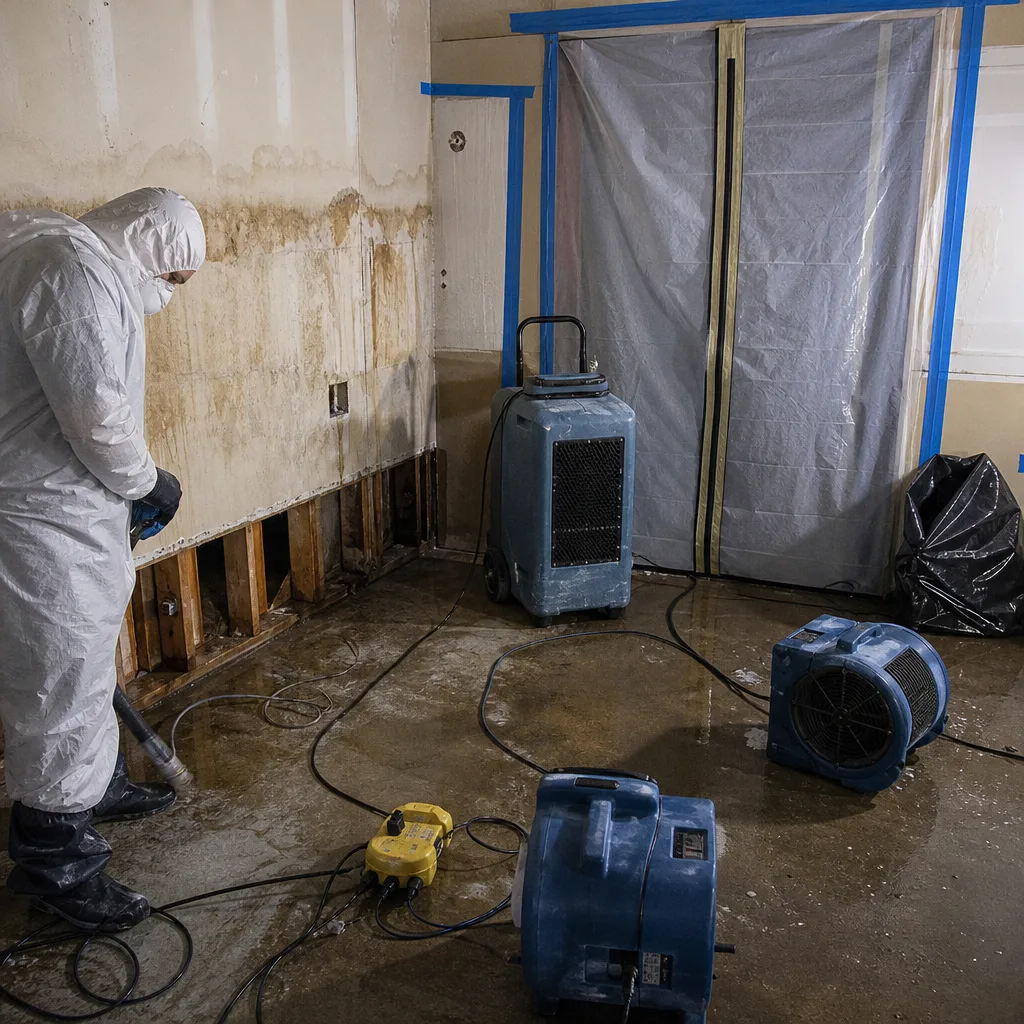 Before
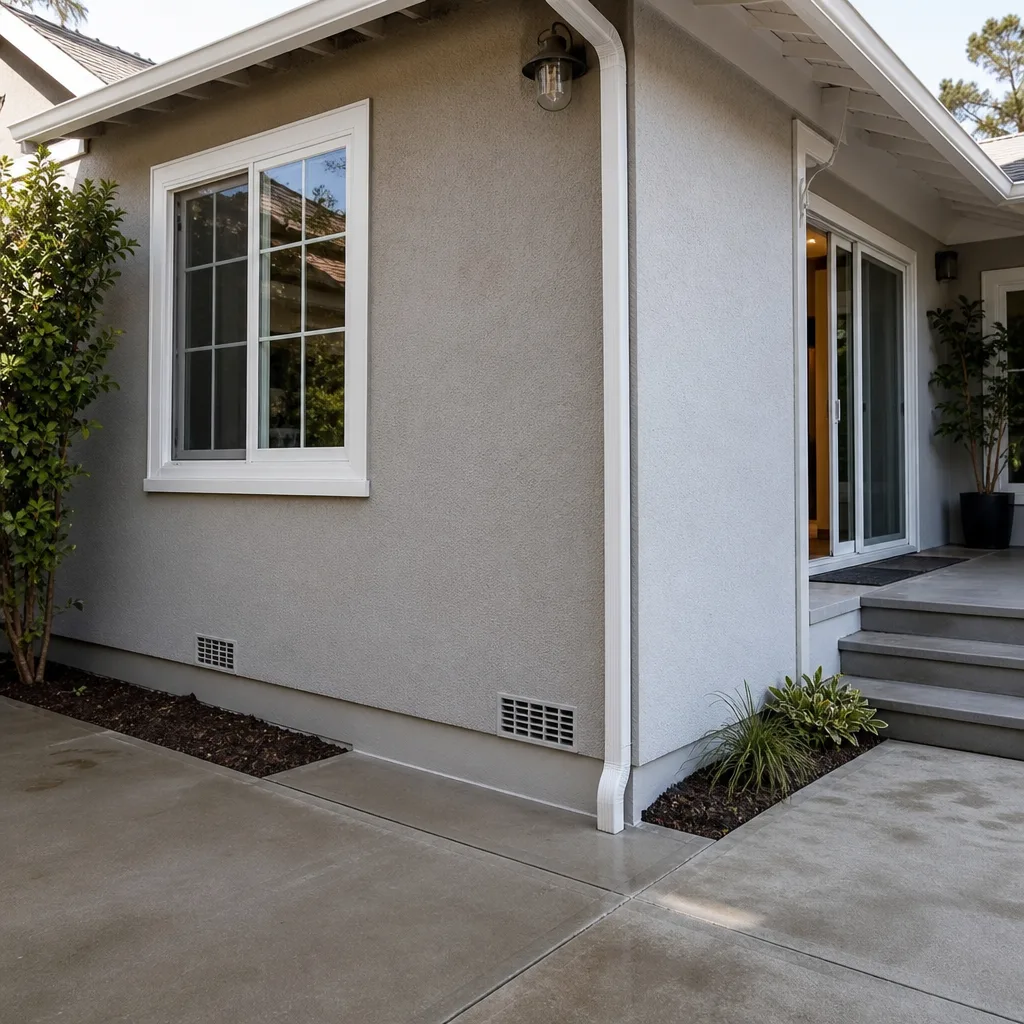 After
After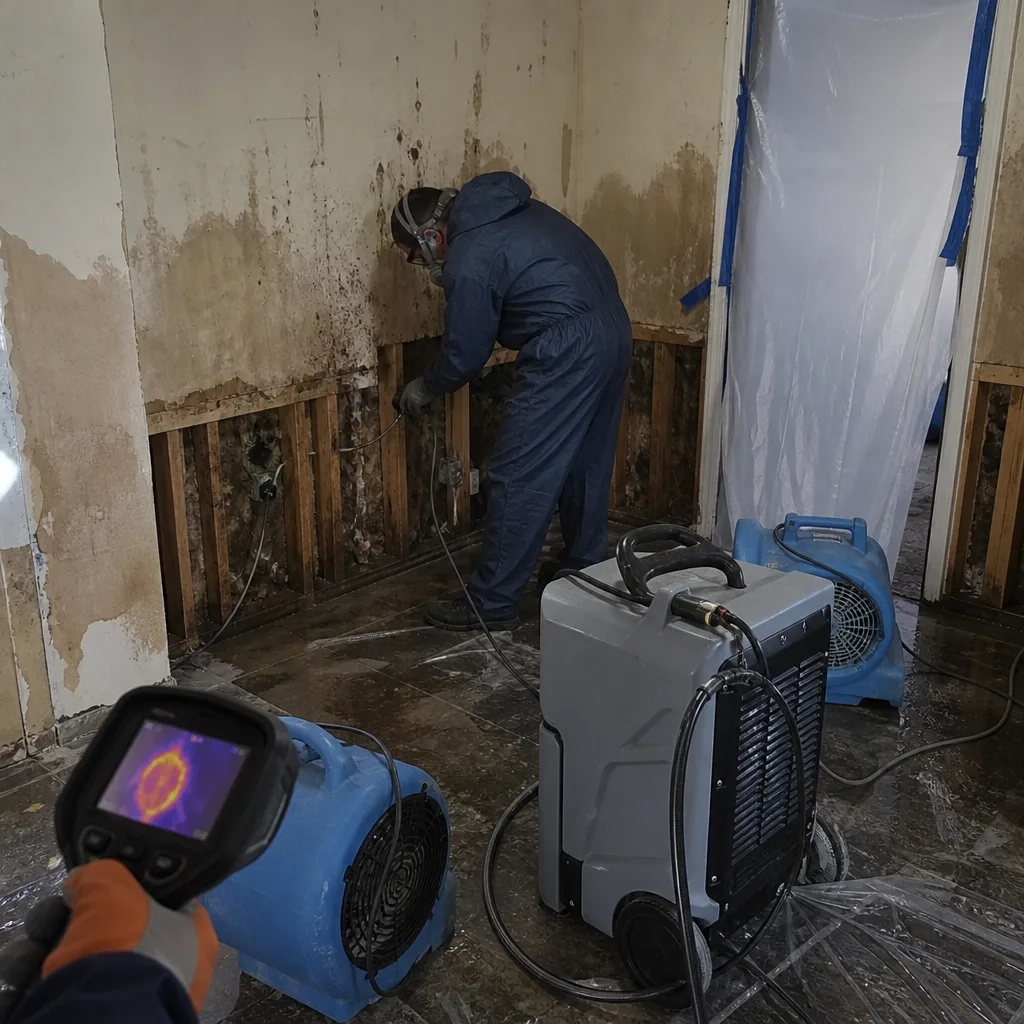 Before
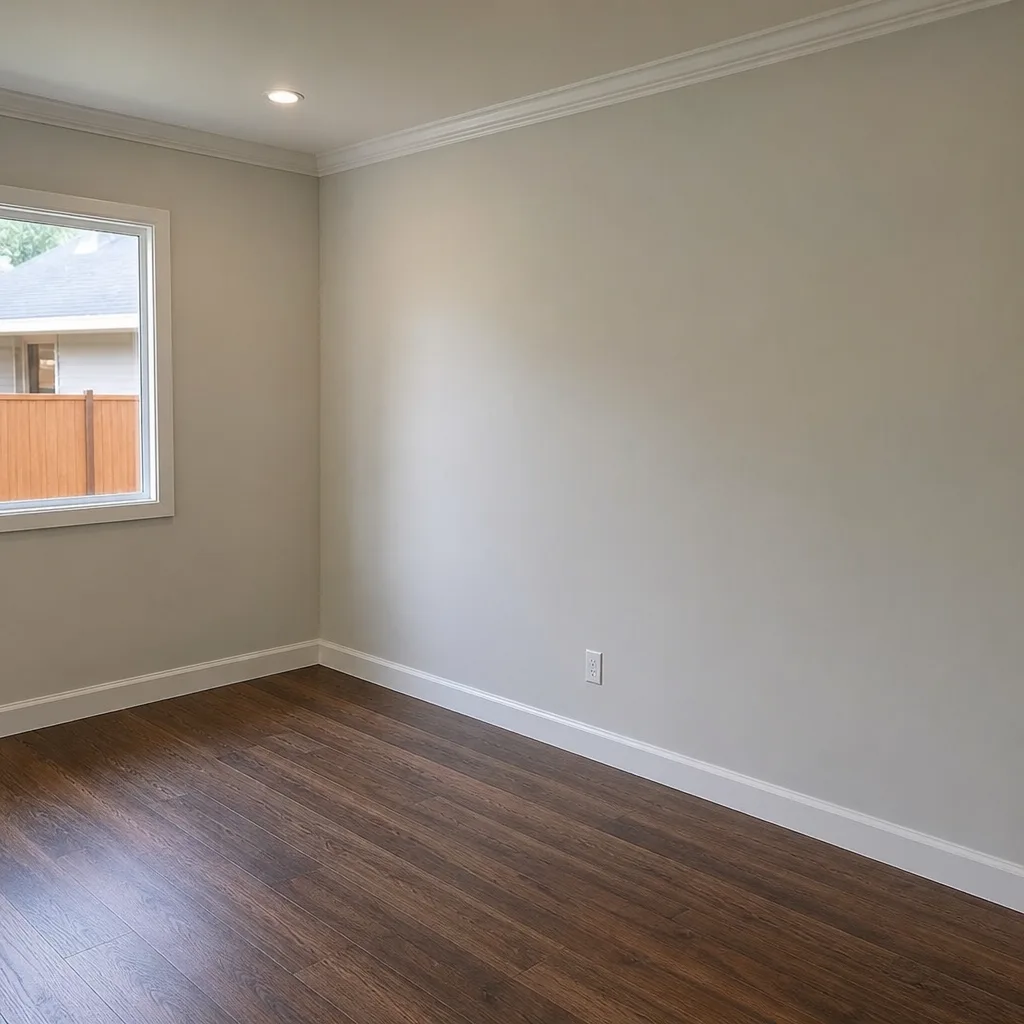 After
After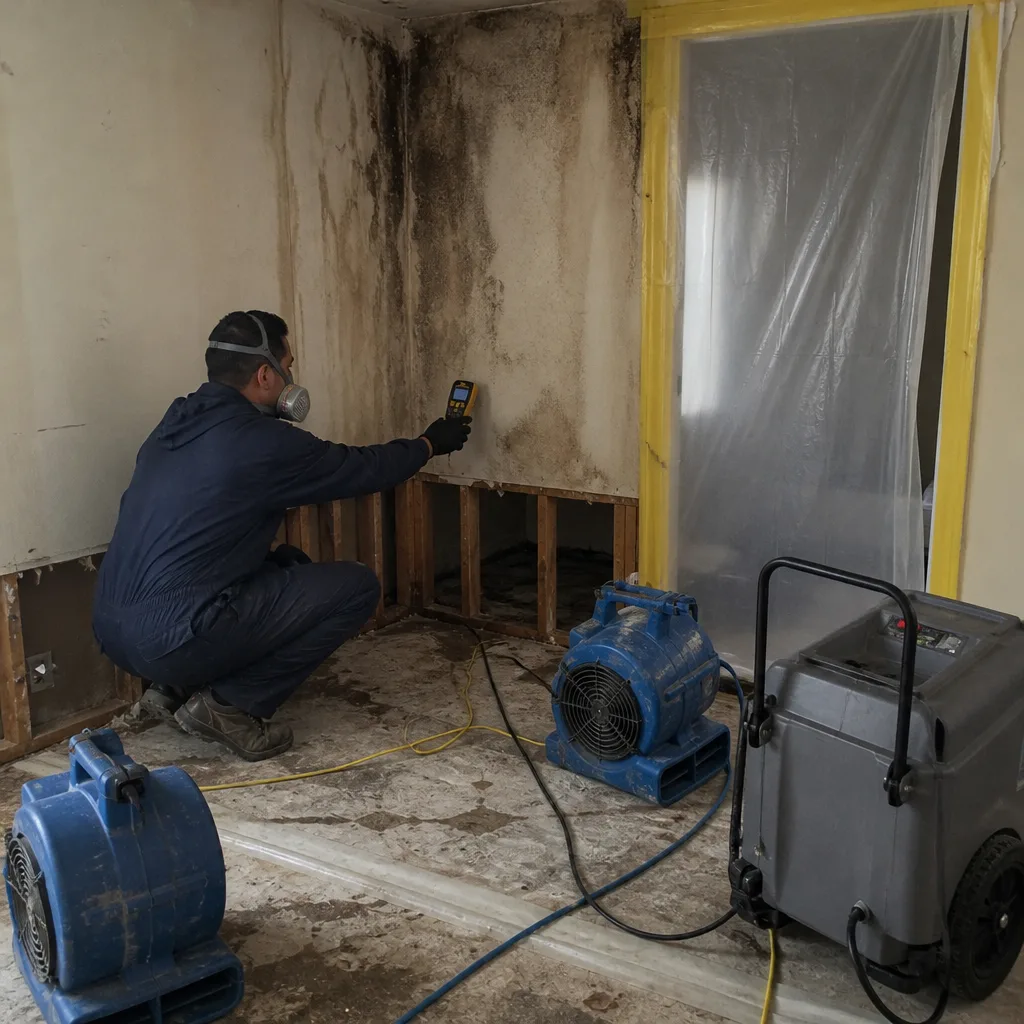 Before
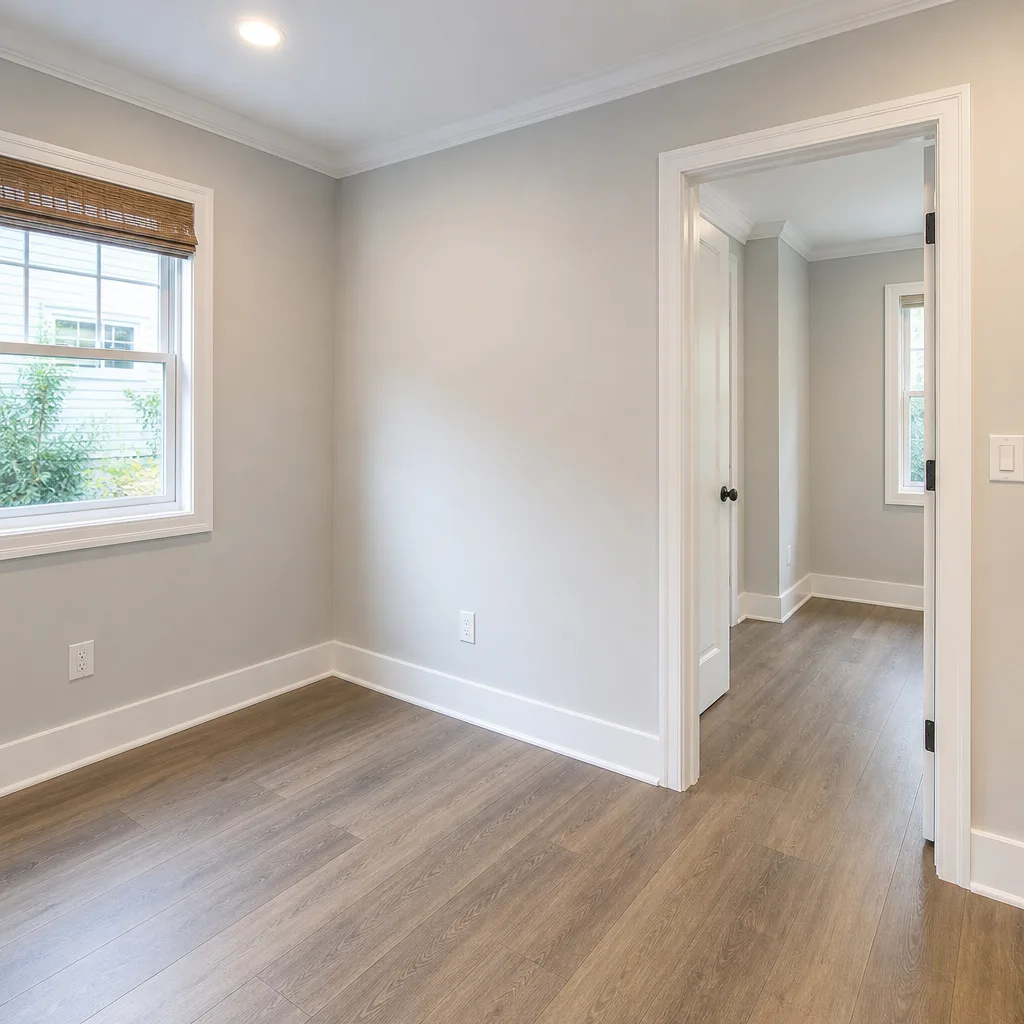 After
AfterCommon Storm Damage Restoration Problems We See in La Crescenta-Montrose Homes
- Legacy hillside drains failing under heavy rain. Many drainage systems above Foothill Boulevard were installed decades ago and never sized for today’s storm intensity. When they fail, sediment and category 3 water pour into basements and crawlspaces within minutes.
- Moisture hidden in 1940s and 1950s stucco walls. Stucco hides water well. Homeowners often try to dry a wall with fans, but without moisture mapping, water stays trapped behind the surface and rots the original wood framing behind it.
- Damp crawlspace joists after extraction. Air movers alone don’t dry a raised foundation. If the air isn’t dehumidified, joists stay damp for weeks, and mold spreads unseen beneath the floor.
- Post-storm warping in original wood siding. When storm water saturates the lower course of wood siding on a mid-century ranch, it swells and warps. Quick drying can save it. Delayed action means replacement, and matching 60-year-old siding is expensive.
Pricing for Storm Damage Restoration in La Crescenta-Montrose, CA
You should know what storm damage restoration costs before you make a call. In La Crescenta-Montrose, flood restoration jobs typically run $3,200 to $9,500. Basement flood cleanup sits between $2,800 and $7,000. A crawlspace-only drying after a drain failure often lands around $2,200 to $4,800. What moves the price: how much sediment came in, whether category 3 water touched drywall or insulation, how many rooms were affected, and whether mold is already present. We give you a written scope and price before any work starts. Estimates are free. Call (626) 657-5106 and we’ll send someone out to look.
We Also Serve Cities Near La Crescenta-Montrose
Our crews cover the foothill communities and nearby cities, including Pasadena, Glendale, Arcadia, and Monrovia. If you’re in one of those areas and dealing with storm water, we can dispatch quickly. For everything else about our local coverage, see our Storm Damage Restoration in La Crescenta-Montrose page.
Serving La Crescenta-Montrose, CA - Our Local Coverage Area
We’re based in the La Crescenta-Montrose area and know this community well. Use the map below to see our service coverage - if you’re nearby, we can almost certainly help.
FAQs About Storm Damage Restoration in La Crescenta-Montrose
Immediately. Mold starts forming within 24 to 48 hours when water sits in a warm, enclosed space. That clock is shorter here because sediment from the Verdugo Mountains carries organic material, which feeds microbial growth faster than clean rainwater. Call (626) 657-5106 right away. Every hour changes the scope of the cleanup.
Because the water arrives with soil, ash, and debris, not as clean runoff. That makes it category 3 water, which requires different containment protocols, more aggressive material removal, and antimicrobial treatment on framing. Flatland homes in Glendale rarely deal with mud intrusion. Homes on the south-facing slopes above Foothill Boulevard deal with it every heavy winter storm.
Check the crawlspace first. Most storm water in split-levels moves through the raised foundation before pooling in the basement. Moisture in joists and subflooring is invisible from above. Also check the bottom plates of basement walls, where water wicks upward into framing, and any original wood siding on the downhill side of the home.
Often, yes, if we start drying within the first 24 hours. Original wood siding from the 1940s and 1950s is dense and dries slower than modern material, but controlled dehumidification can pull the moisture out before warping sets in permanently. Once boards cup or split, matching the material becomes difficult and expensive. Quick action matters.
Mitigation means stopping the damage from spreading. For a crawlspace, that includes water extraction, removal of mud and soaked insulation, placement of dehumidifiers and air movers beneath the home, and moisture monitoring until the joists read dry. We also apply antimicrobial treatment to framing where category 3 water made contact. It’s the same protocol we run on large commercial losses, scaled to a residential footprint.
Written by Tobias Reyner, Owner at Marsh Water Damage Pasadena, serving La Crescenta-Montrose since 2005.