
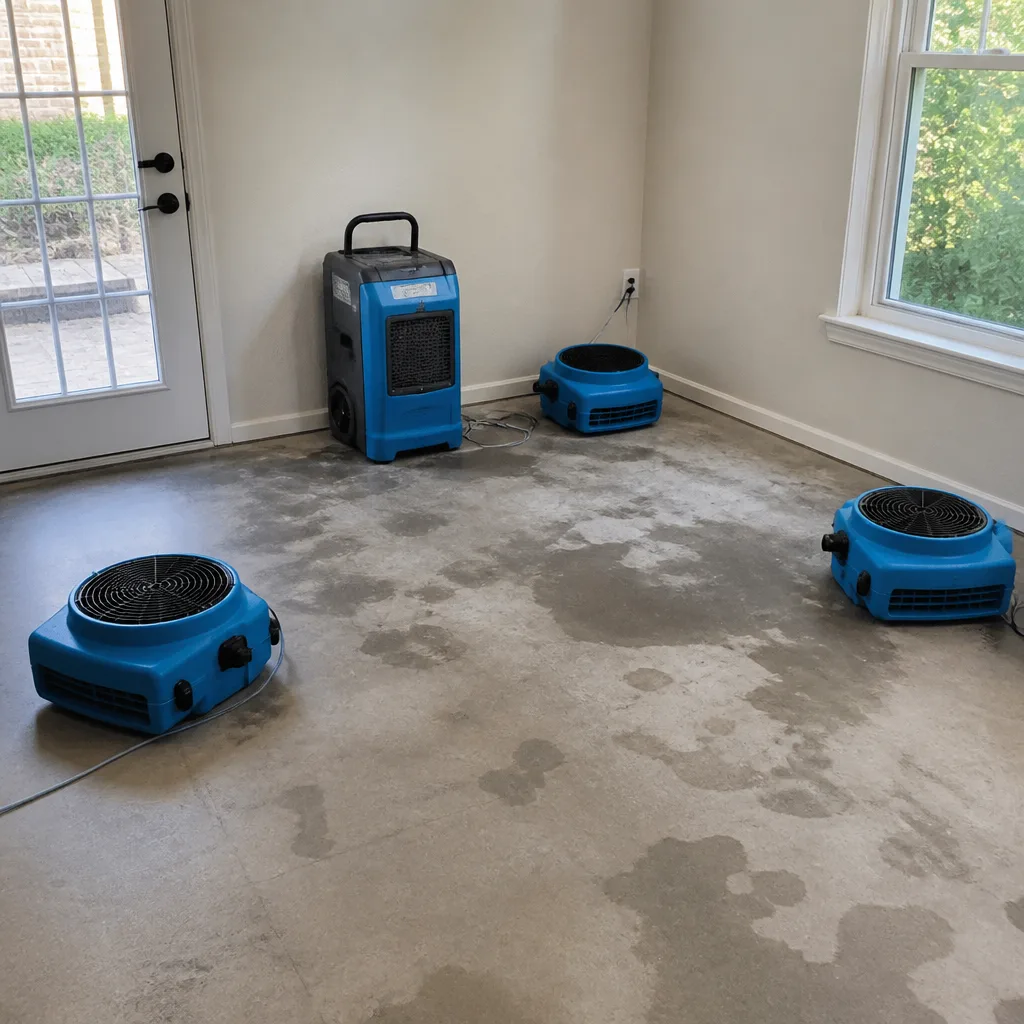
 Water damage drying
 Fire & smoke cleanup
 Mold remediation
 Storm response
 Sewage cleanup
 Reconstruction
Free visual inspection and a written scope of work before any mitigation begins - photos, moisture readings, and drying logs go in your claim file
The scope we write is the scope we bill. Anything new gets shown to you, in writing, before we touch it.
Get your free estimateRestoration work we handle
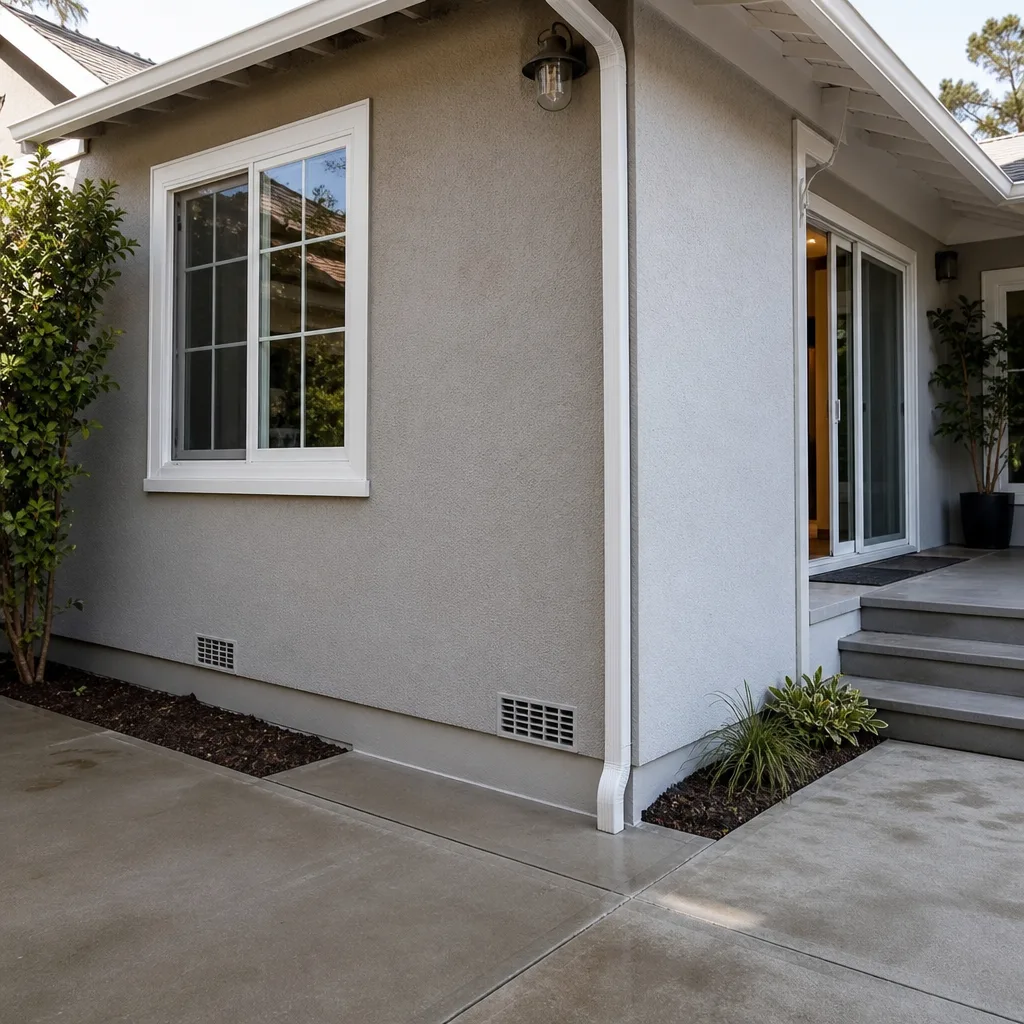
See the difference
 Before
 After
After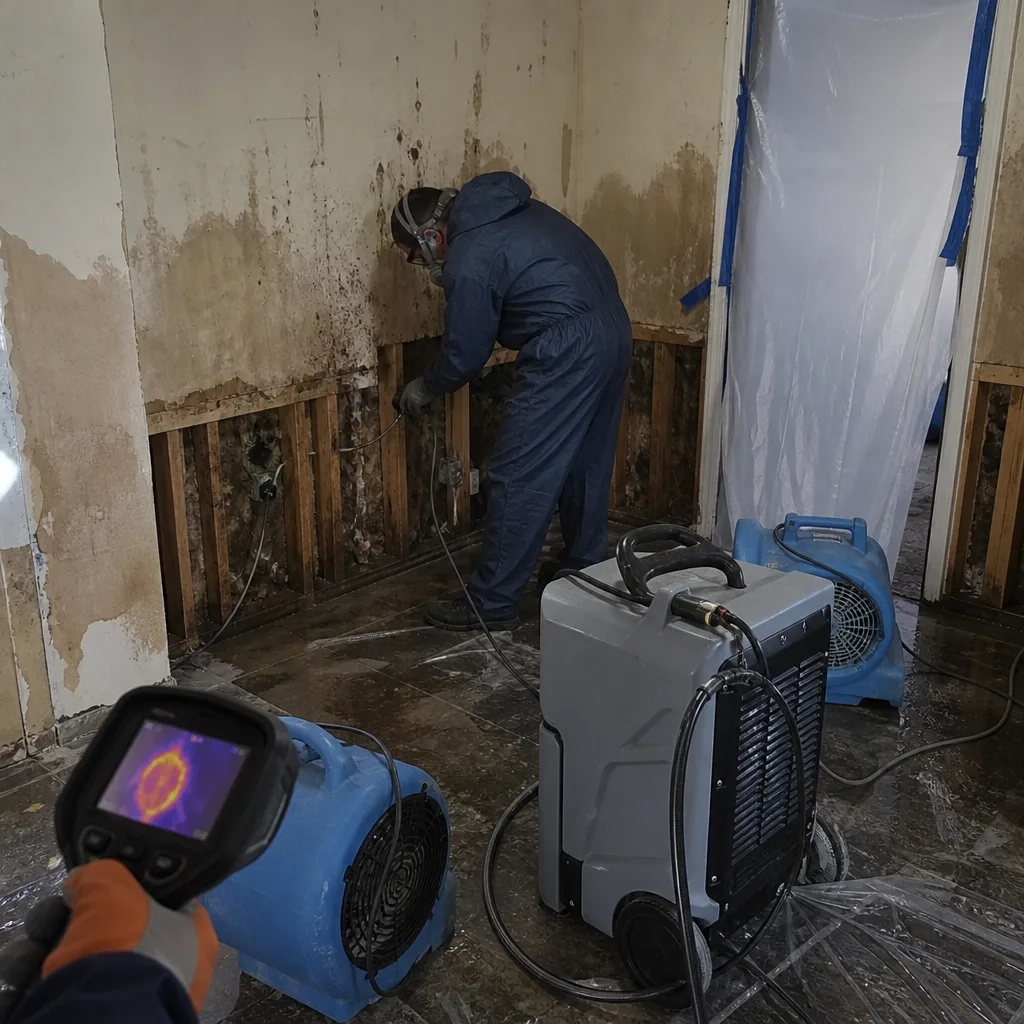 Before
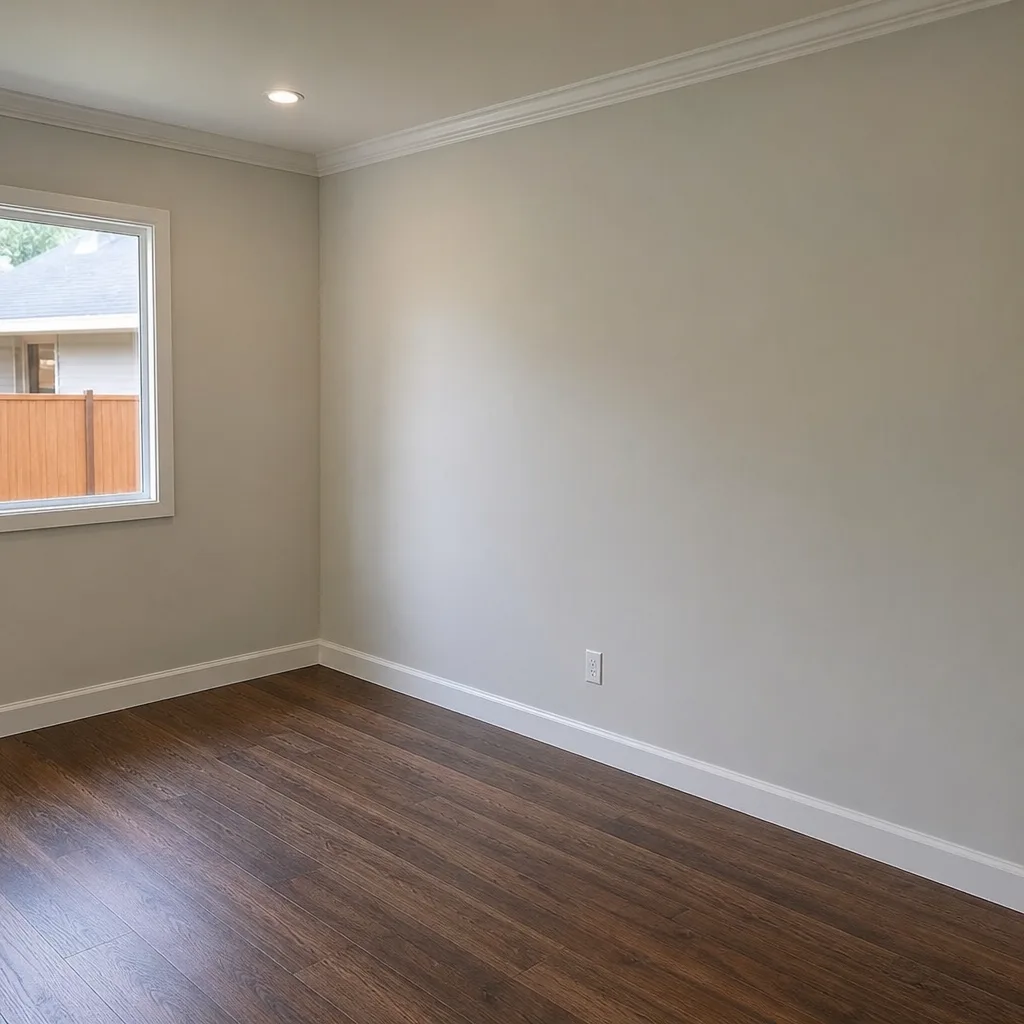 After
After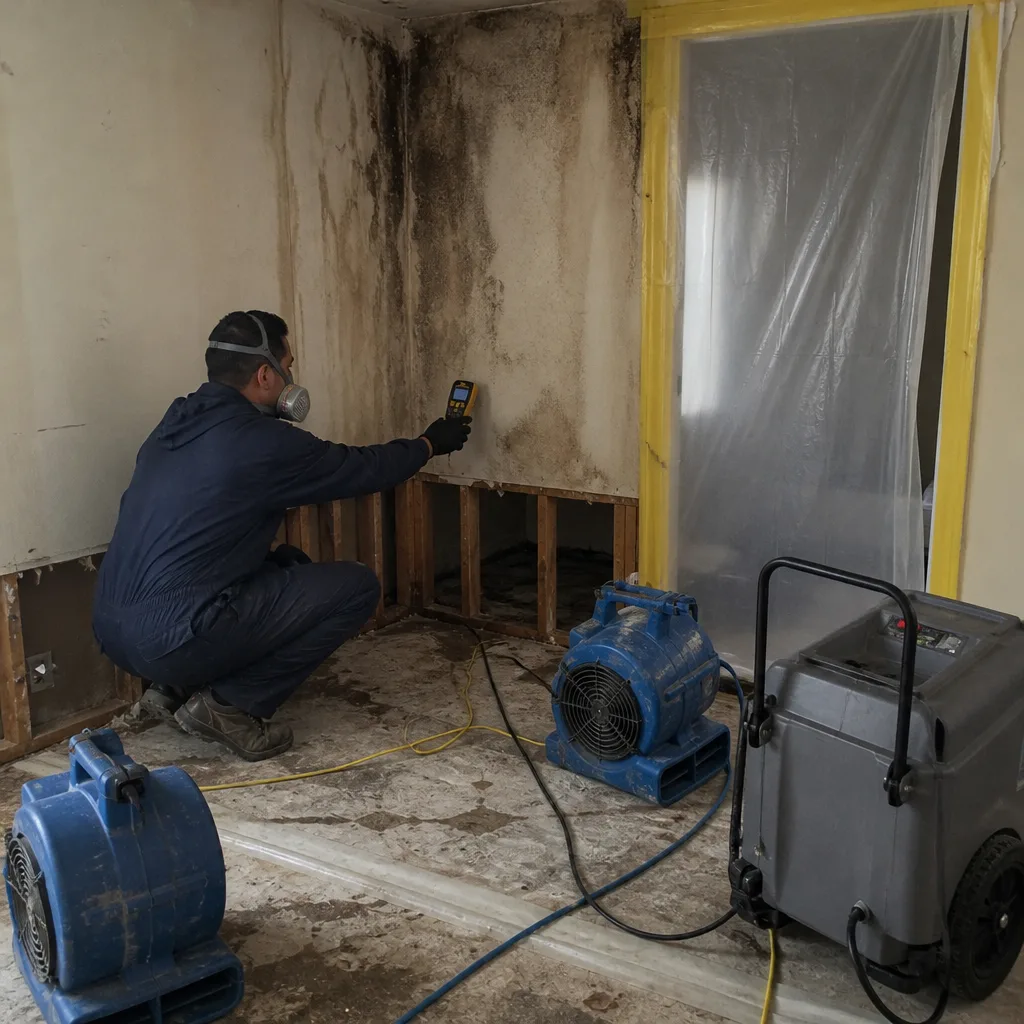 Before
 After
AfterMold Inspection & Testing in Pasadena, CA
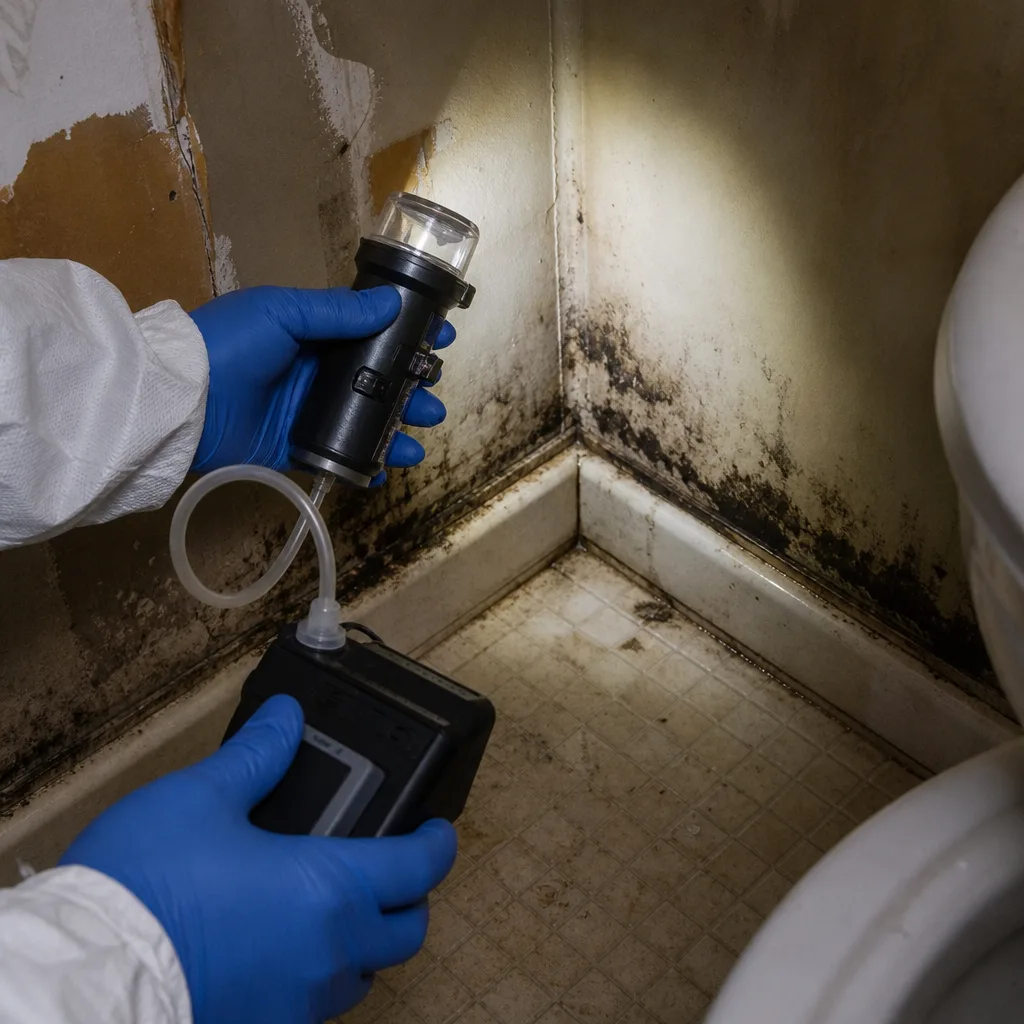
Mold inspection and testing in Pasadena tells you three things: whether you have a mold problem, what kind of mold it is, and how far it has spread. Most inspections take 60 to 90 minutes and include moisture readings, air sampling, and a visual survey of the areas where mold commonly hides. At Marsh Water Damage Pasadena, we run inspections with the same equipment and standards we use on full Mold Remediation in Pasadena jobs, so you get answers you can act on, not a sales pitch. Call (626) 657-5106 and we’ll schedule an inspector who arrives with a name, a face, and a photo ID badge you already saw before the knock.
People call us for inspections for all kinds of reasons. A musty smell that comes and goes. A water stain that appeared after the last winter rain. A child whose allergies got worse after moving into a new bedroom. A real estate transaction that needs sign-off. Or just the nagging feeling that something in the walls is not right. Whatever pulled you here, the first question is always the same: is there mold, and how serious is it. That is exactly what we answer.
When You Need Mold Inspection & Testing
Not every water stain needs a full inspection, and not every musty smell means hidden mold. But Pasadena’s older housing stock and our wet winters create conditions where mold takes hold quickly and quietly. Here is when an inspection makes sense:
- You smell something musty but cannot see it. Mold often grows inside walls, under flooring, or in HVAC ducts long before it becomes visible. A persistent earthy smell in a specific room is the most common sign of hidden growth.
- You had a water event and did not dry it thoroughly. A slow leak under a sink, a supply line that dripped for weeks, a roof leak that soaked drywall over a rainy January. In Pasadena’s climate, damp drywall and framing can support mold within 48 to 72 hours.
- Staining keeps returning after you clean it. If you scrub a patch of discoloration off a wall or ceiling and it comes back within weeks, you are likely dealing with growth beneath the surface, not surface staining.
- You or a family member has unexplained respiratory symptoms at home. Chronic coughing, sneezing, itchy eyes, or worsened asthma that improves when you leave the house often points to indoor air quality issues, including elevated mold spore counts.
- You are buying or selling a home in Pasadena. Many transactions in neighborhoods like Bungalow Heaven, Madison Heights, or Linda Vista now include mold inspection contingencies. An independent, documented inspection protects both sides.
- Your home flooded and the restoration was done quickly. We regularly see cases in Pasadena where floodwater was extracted but hidden cavities behind baseboards, under cabinets, or inside wall chases were never properly dried. Mold follows.
If any of these sounds familiar, an inspection costs less than the alternative: discovering a widespread problem only after it has compromised framing or forced a family out of a bedroom.
Our Mold Inspection & Testing Process
Every Marsh inspection follows the same sequence. You will know the cost before we start, who is coming to your door before they arrive, and what we found before we leave. No vague reports, no fear tactics. Here is how it works:
- You call us and speak to a live person. Our phones are answered 24/7 by an actual human being, not a voicemail tree. You describe what you are seeing or smelling, and we schedule a time that works. Before the visit, you receive the technician’s name and photo by text or email. This is our Threshold Verified standard, and it applies to every single visit.
- The technician arrives with photo ID and does a walkthrough. Your inspector shows a badge with their name and photo matching what you already received. We walk the property together, and you point out every concern: the smell in the hallway, the stain above the window, the wall that feels cold to the touch. You are not handing your house to a stranger; you are accompanying a professional who has already been identified to you.
- Moisture mapping and visual inspection. Using moisture meters and thermal imaging, we locate areas where moisture is trapped. In Pasadena’s older homes, we pay special attention to bathroom walls, under-sink cabinets, window frames, and any area where stucco meets wood framing, since even small exterior cracks can channel rainwater into wall cavities.
- Sampling where indicated. If we find visible mold or moisture patterns that suggest hidden growth, we collect samples. Air samples measure spore counts in the room and compare them to outdoor baseline levels. Surface samples, taken with a swab or tape lift, identify the specific mold type when visible growth is present. These samples go to a third-party laboratory for analysis, which means the results are not filtered through our opinion. We also inspect HVAC registers and duct interiors when airflow patterns suggest contamination.
- You get a plain-English report. Within a few days, the lab results come back. We walk you through what was found, where it was found, what the spore counts mean, and whether remediation is warranted. If it is, you get a written price for the work before anything starts. If it is not, we tell you that too, and you pay only for the inspection.
One thing we do not do: we do not inspect your home and then pressure you into a remediation contract on the spot. The inspection is a service, not a funnel. Plenty of Pasadena homeowners have called us for an inspection, gotten a clean report, and gone on with their lives. That is a good outcome, and we are glad to deliver it.
Mold Inspection & Testing Pricing in Pasadena
Mold inspection in Pasadena typically runs between $250 and $600 for a standard single-family home, depending on the square footage and the number of samples collected. Here is a breakdown of what drives cost:
| Service Component | Typical Range | Notes |
|---|---|---|
| Visual inspection + moisture mapping | $150 – $300 | Includes thermal imaging and moisture meter readings. |
| Air sampling (per sample) | $75 – $150 | Most homes need 2 – 4 samples: indoor problem area, indoor control area, outdoor baseline, and sometimes a fourth location. |
| Surface sampling (per sample) | $50 – $100 | Swab or tape lift used when visible growth is present. |
| HVAC inspection add-on | $100 – $200 | Recommended for homes with central air, especially in Pasadena’s older systems. |
| Lab analysis fees | $50 – $150 total | Paid to the third-party lab; we pass this through at cost. |
What affects the price most is sample count. A small condo in Old Town Pasadena might need two air samples and one surface sample, while a larger Craftsman in the Arroyo with a crawlspace, an attic, and three bathrooms might need six or more. We give you a written price for the inspection before we start, and that price does not change unless you ask us to test additional areas. You will never get a surprise invoice because we “found more than expected.” If we find more than expected, the remedy for that is a separate written quote for mold remediation, not a revised inspection bill.
Marsh gives free estimates for any remediation work that follows an inspection. Call (626) 657-5106 and tell us what you are seeing, and we will quote the inspection over the phone.
What the Lab Report Actually Tells You
Mold testing reports are dense, and most people get lost in the columns. Here is what we look at, and what you should look at too:
- Indoor vs. outdoor spore count comparison. The single most useful number. If indoor counts for a given mold type are significantly higher than the outdoor control, that mold is likely growing indoors. If indoor and outdoor counts are similar, what you are seeing may be normal environmental spores that blew in through a window or rode in on a shoe.
- Presence of water-damage indicator molds. Some molds, like Stachybotrys (often called black mold) and Chaetomium, appear almost exclusively in chronically wet building materials. Their presence tells us there is an ongoing moisture source, not just a one-time damp event.
- Species identification. Not all molds are equal. Cladosporium and Penicillium are common and relatively low in toxicity for most people, though they can still trigger allergies. Aspergillus and Stachybotrys deserve more attention, particularly in households with infants, elderly residents, or anyone with compromised immunity.
- HVAC findings. If samples taken at a supply register show elevated spores, the ducts themselves may be contaminated, which means every room the system serves is getting a dose of the same air. That changes the scope of remediation.
We explain all of this in plain English when we deliver your report. You will not need a biology degree to understand what we found, where it is, and what it means for your family. And if the report is clean, we will say so directly, not dangle “ongoing monitoring” as a way to keep billing you.
Why Pasadena Homes Need Different Attention
Pasadena is not one climate; it is several. Homes in the foothills above the Rose Bowl deal with heavier winter rain and occasional drainage issues. Homes nearer the Arroyo Seco contend with higher relative humidity and dense tree canopy that slows drying. Older neighborhoods like Bungalow Heaven and Garfield Heights have original 1920s and 1930s construction, meaning plaster walls, wood lath, pier-and-beam foundations, and crawlspaces that are often dirt-floored and poorly ventilated. All of those conditions create specific mold risks that a newer stucco tract home in East Pasadena might not face.
We see the same patterns year after year. In the Bungalow Heaven and Craftsman Heights areas, the most common mold issue by far is crawlspace growth that migrates up through floor framing and into living spaces, often showing up first as a persistent musty smell in a hallway or a guest bedroom. In the hillside homes above the 210, roof flashing failures during winter storms let water track down inside walls, and the mold shows up months later as staining near baseboards or window corners. Condos and townhomes in the Playhouse District and South Lake Avenue often struggle with shared-wall moisture and bathroom exhaust fans that vent into attic spaces rather than outside, which slowly charges the attic air with humidity until mold establishes on the underside of the roof sheathing.
Those specifics matter because they change what an inspector looks for. A generic inspection checklist does not catch a bathroom fan venting into an attic; a Pasadena inspector who has seen it dozens of times knows to look up. That is the difference between a report that finds the problem and a report that just checks boxes.
Inspection vs. Remediation: What You Get From Each
It is worth being clear about the line between these two services, because the distinction saves people money. An inspection finds the problem. Mold removal (remediation) removes it. Some companies blur the line intentionally: they offer a “free inspection” that always seems to find something requiring immediate remediation. We keep the two separate.
When Toby Reyner and our team inspect a home, the deliverable is information. You get lab results, moisture readings, and a written explanation of what we found. If remediation is needed, you get a separate written quote. You are free to take that quote and compare it. You are free to do nothing. The inspection fee is the only cost, and it is quoted before we start. If you do choose us for Mold Remediation, the inspection cost is credited toward the job. That is not a promotional gimmick; it is just how the work order is structured.
Our remediation work carries the 365-Day Done Right Promise: if the mold returns within a year, we return. The second visit is free. That promise is printed on every work order, not buried in fine print and not something you have to argue for later.
Equipment and Credentials That Matter
We run inspections using the same tools we use on commercial losses: Dri-Eaz moisture meters for precise readings in drywall, framing, and flooring; Phoenix air movers and dehumidifiers when we need to test drying conditions; XPOWER air sampling pumps calibrated for fungal spore collection. The lab we use is independent and accredited; we do not process samples in-house, and we do not interpret results through any lens other than what the numbers show.
Our technicians hold credentials through the IICRC, RIA, and IFA, which are the recognized training bodies for the restoration and inspection trades. Those are not wall decorations. They mean the person taking your air samples knows how to calibrate the pump, how many liters of air to pull, how to prevent cross-contamination between samples, and how to ship specimens so the lab results are valid. Small mistakes in sampling produce useless data, and useless data leads to either a false sense of safety or an unnecessary remediation. Neither is acceptable.
FAQs – Mold Inspection & Testing
How much does mold inspection cost in Pasadena?
A full mold inspection in Pasadena typically costs between $250 and $600 for a standard single-family home, including moisture mapping and a few samples. Air samples add roughly $75 to $150 each, and surface samples run $50 to $100 each. Call (626) 657-5106 for a phone quote before you commit; Marsh gives you a written price before any inspector sets foot in your home.
Can you inspect for mold and remediate it the same day?
In most cases, no, and you should be wary of anyone who offers that. Lab results take 2 to 4 business days to return, and a remediation plan should be based on those results, not on a technician’s eyeball estimate. We will inspect, deliver the report when the lab comes back, and then quote remediation if it is warranted. If the situation is urgent (visible growth spreading, a child with severe symptoms), we can begin containment and drying while the samples are being processed. But a complete remediation always waits for the lab.
Is mold testing worth it, or can I just clean what I see?
If the growth is small (under about 10 square feet, roughly the size of a standard interior door) and you know the moisture source has been fixed, cleaning may be enough. If the growth is larger, if it is in a wall cavity or HVAC system, or if someone in the house has respiratory symptoms, testing is worth the cost because it tells you the mold type and the extent of contamination. Guessing wrong about the scope of a mold problem means either living with it or paying for a remediation that misses the real source.
What is the difference between mold inspection and mold testing?
Inspection means the visual survey, moisture mapping, and the inspector’s professional judgment about where mold is likely hiding. Testing means the samples: air, surface, or bulk material sent to a lab for species identification and spore counts. A complete mold assessment includes both. Inspection without testing can miss invisible contamination; testing without a proper inspection can produce samples that do not represent the true problem. At Marsh, we do both together, every time.
Do you inspect rental properties and multi-unit buildings in Pasadena?
Yes. We inspect single-family rentals, apartment units, condominiums, and common areas in multi-unit buildings. For landlords and property managers in Pasadena, we provide documentation suitable for tenant communication and legal records, including a third-party lab report and a written summary of findings. Call (626) 657-5106 and we will schedule directly with you or your tenant, whichever is more practical.
Key Takeaways
- Mold inspection in Pasadena costs $250 to $600 for most homes, with sample fees added per test. We quote the full inspection price before we arrive.
- Insist on a third-party lab; in-house testing is a conflict of interest. We use an independent, accredited lab and pass the results through untouched.
- Pasadena’s older homes have specific mold patterns: crawlspace growth in Craftsman neighborhoods, attic humidity from improperly vented bathroom fans in condos, and wall-cavity mold from winter roof leaks in foothill homes. A local inspector knows where to look.
- Inspection and remediation are separate services. We charge for the inspection, deliver the report, and then quote remediation separately if it is needed. No high-pressure bundling.
- Every Marsh technician arrives as a Threshold Verified visitor: background-checked, identity-verified, with name and photo sent to you before the visit, and photo ID shown at the door.
- The 365-Day Done Right Promise applies to remediation. If mold returns within a year, so do we, at no charge for the re-visit.
Call Marsh Water Damage Pasadena for a Mold Inspection
If you smell something you cannot find, see staining that will not stay gone, or just need documented answers before a real estate closing, call us today. A live person answers at (626) 657-5106, 24 hours a day, every day, including holidays. Tell us what you are dealing with, and we will give you an inspection quote over the phone and schedule a Threshold Verified technician who arrives with a name, a face, and a badge. You will know who is coming before they knock. That is how every visit works, no exceptions.
Written by Tobias Reyner, Owner at Marsh Water Damage Pasadena, serving Pasadena.