
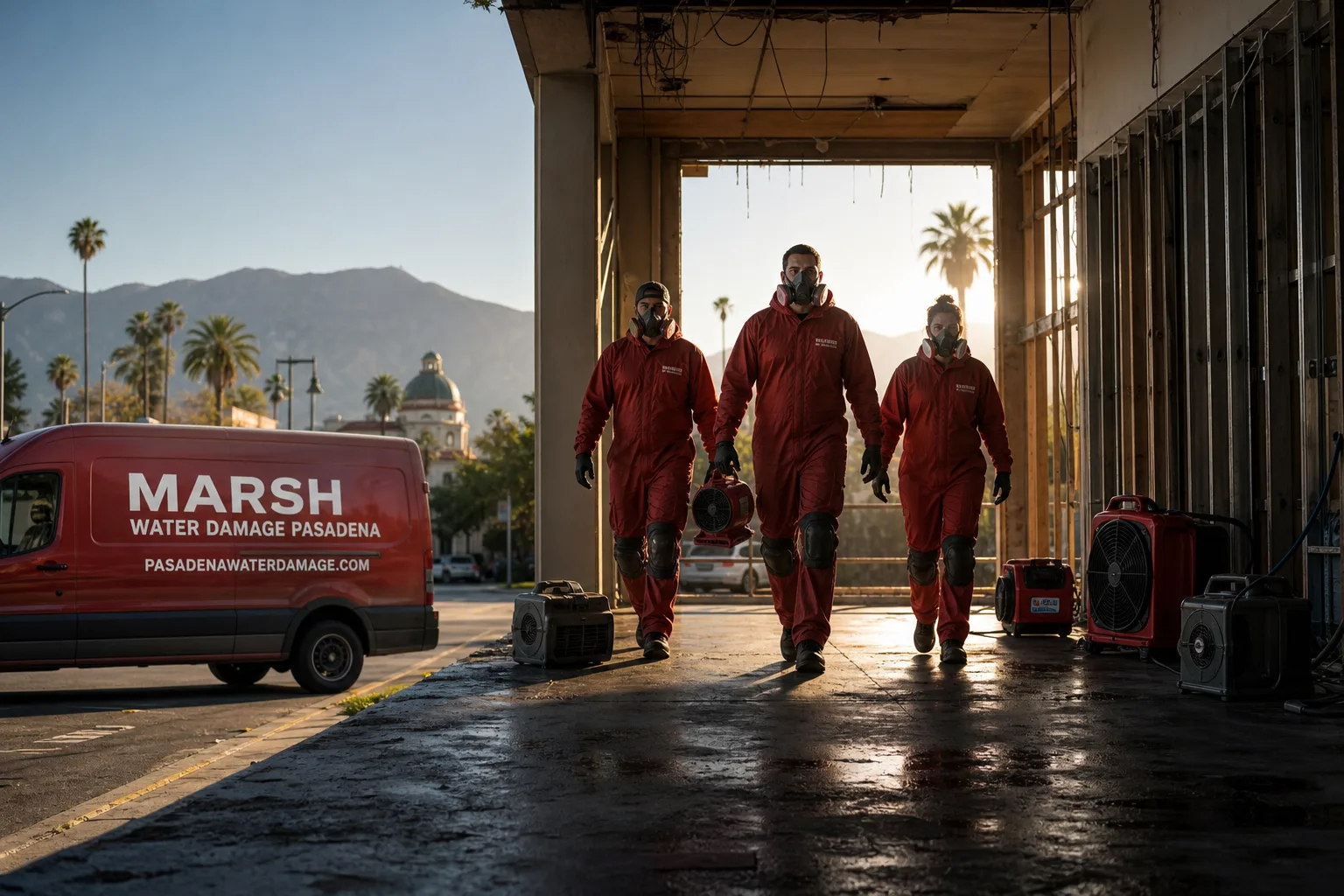
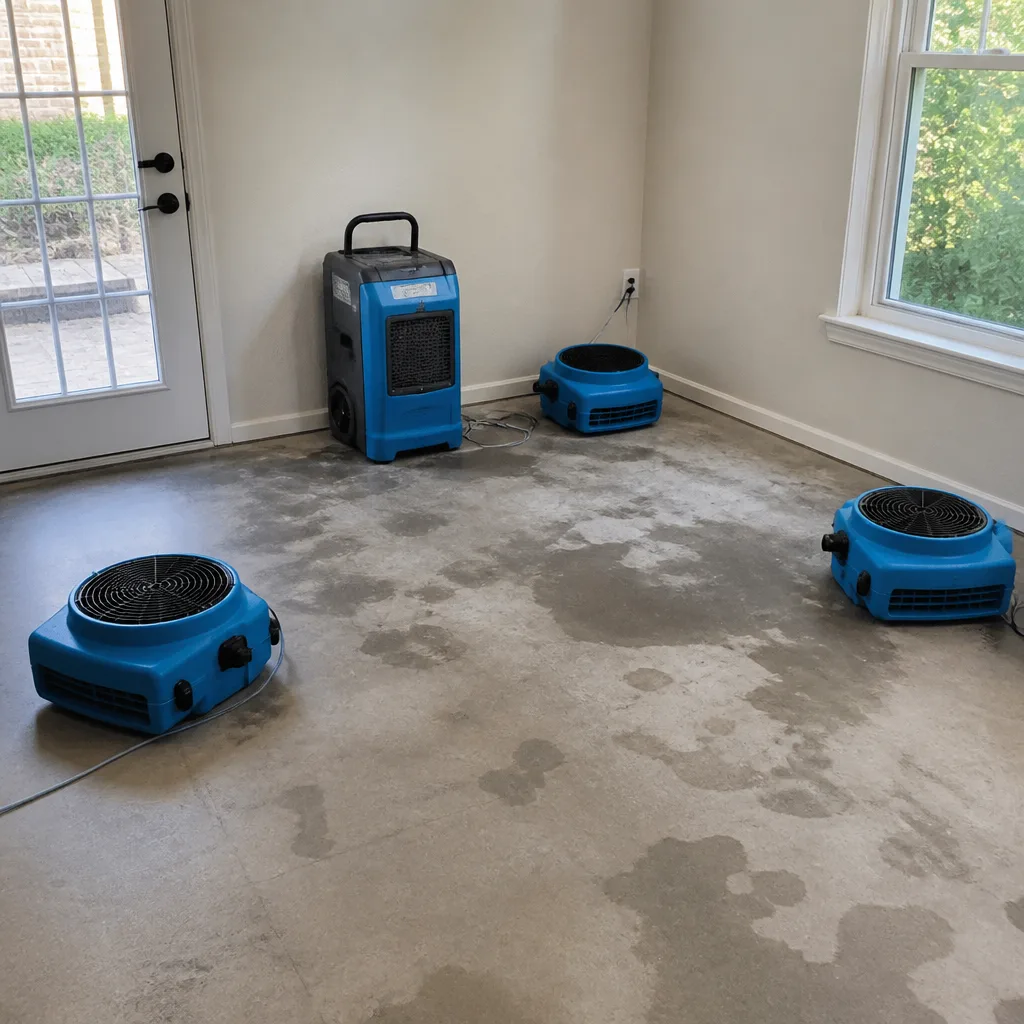
 Water damage drying
 Fire & smoke cleanup
 Mold remediation
 Storm response
 Sewage cleanup
 Reconstruction
Free visual inspection and a written scope of work before any mitigation begins - photos, moisture readings, and drying logs go in your claim file
The scope we write is the scope we bill. Anything new gets shown to you, in writing, before we touch it.
Get your free estimateRestoration work we handle
See the difference
 Before
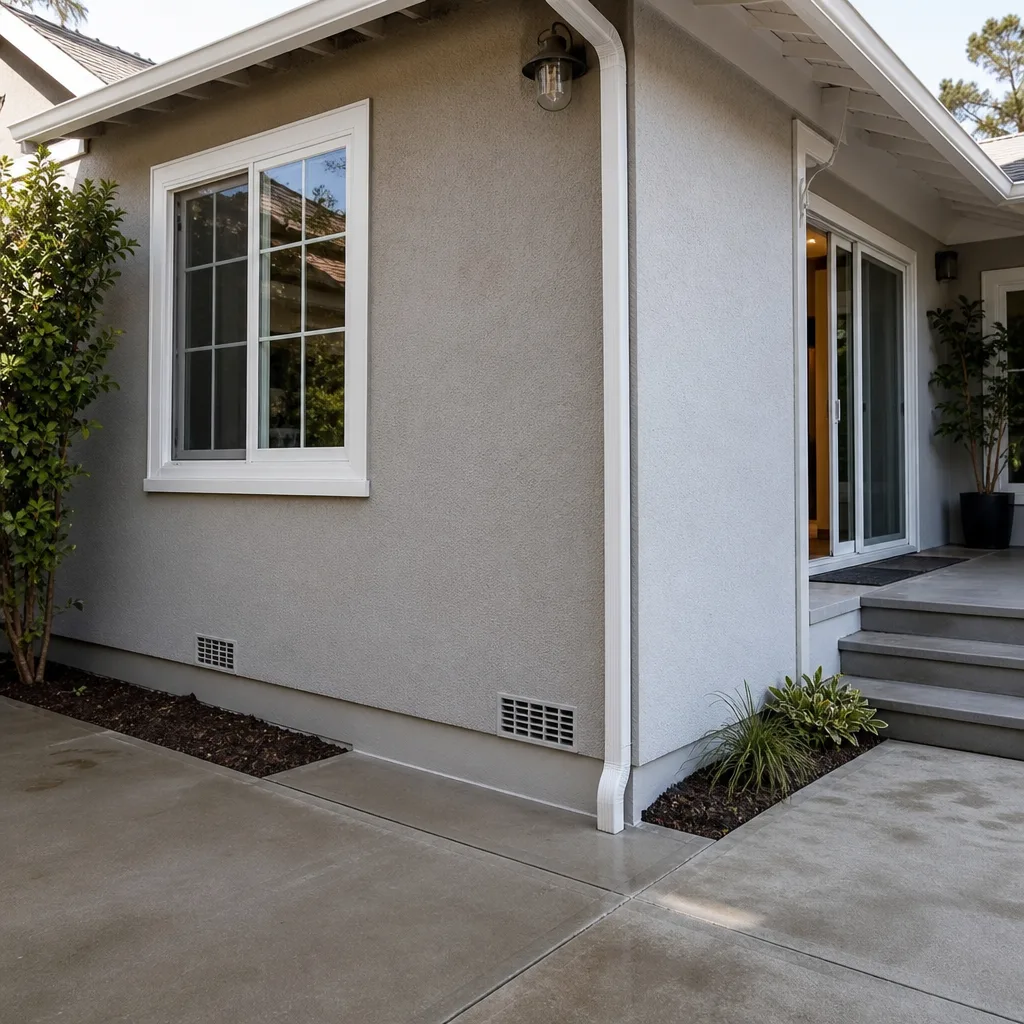 After
After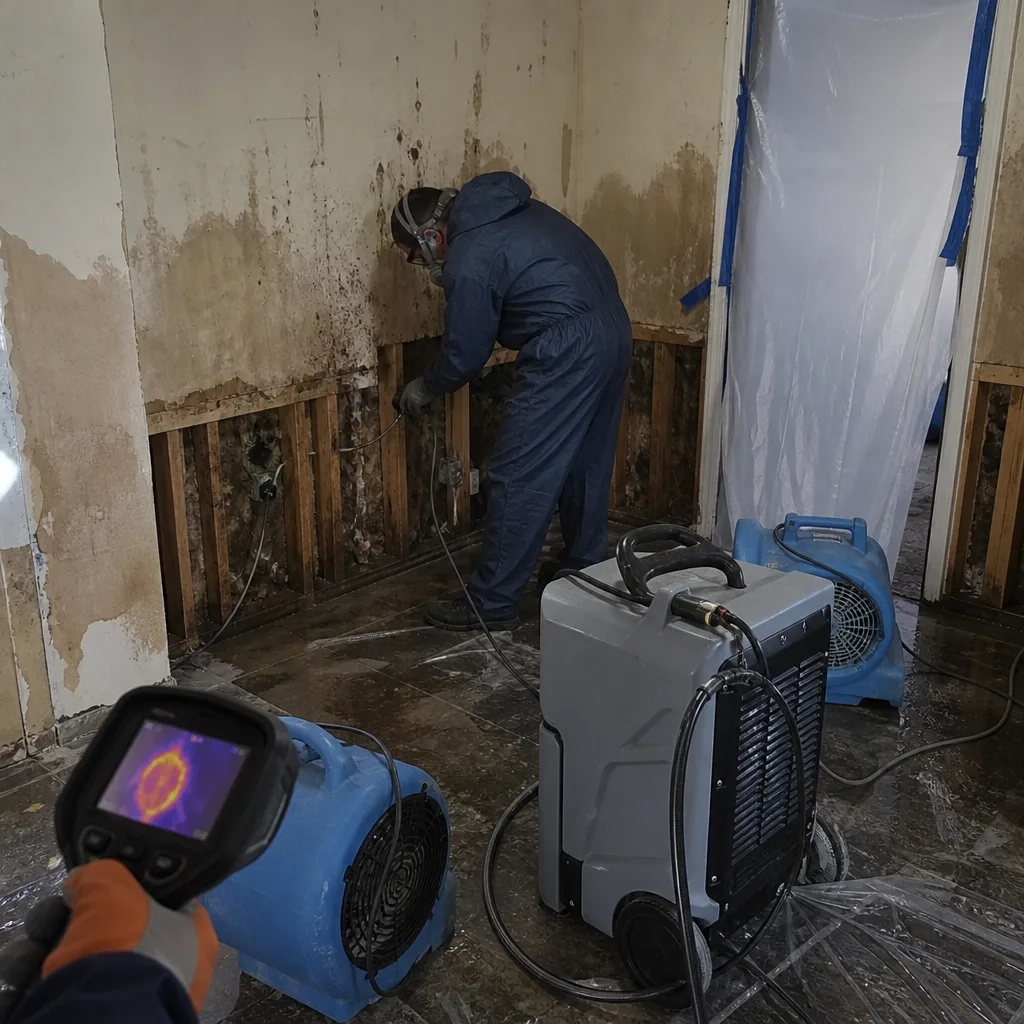 Before
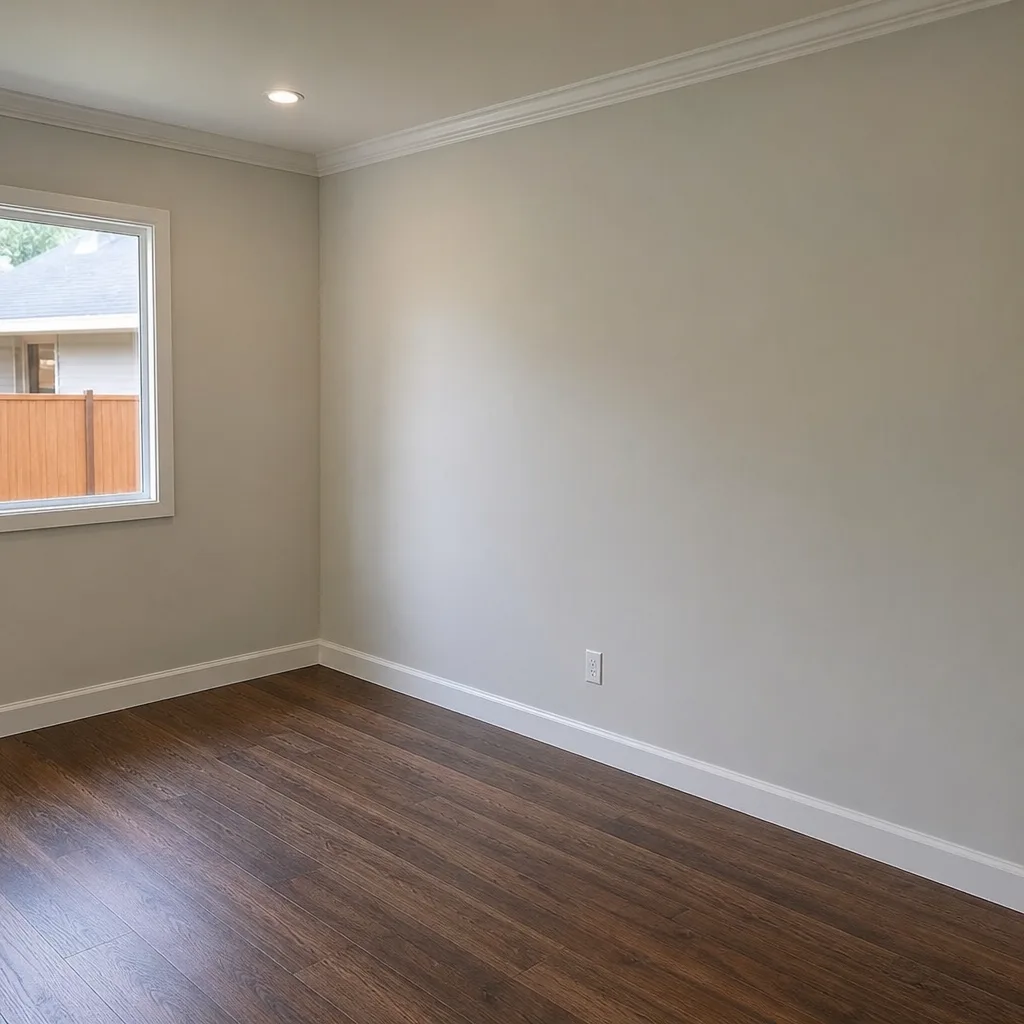 After
After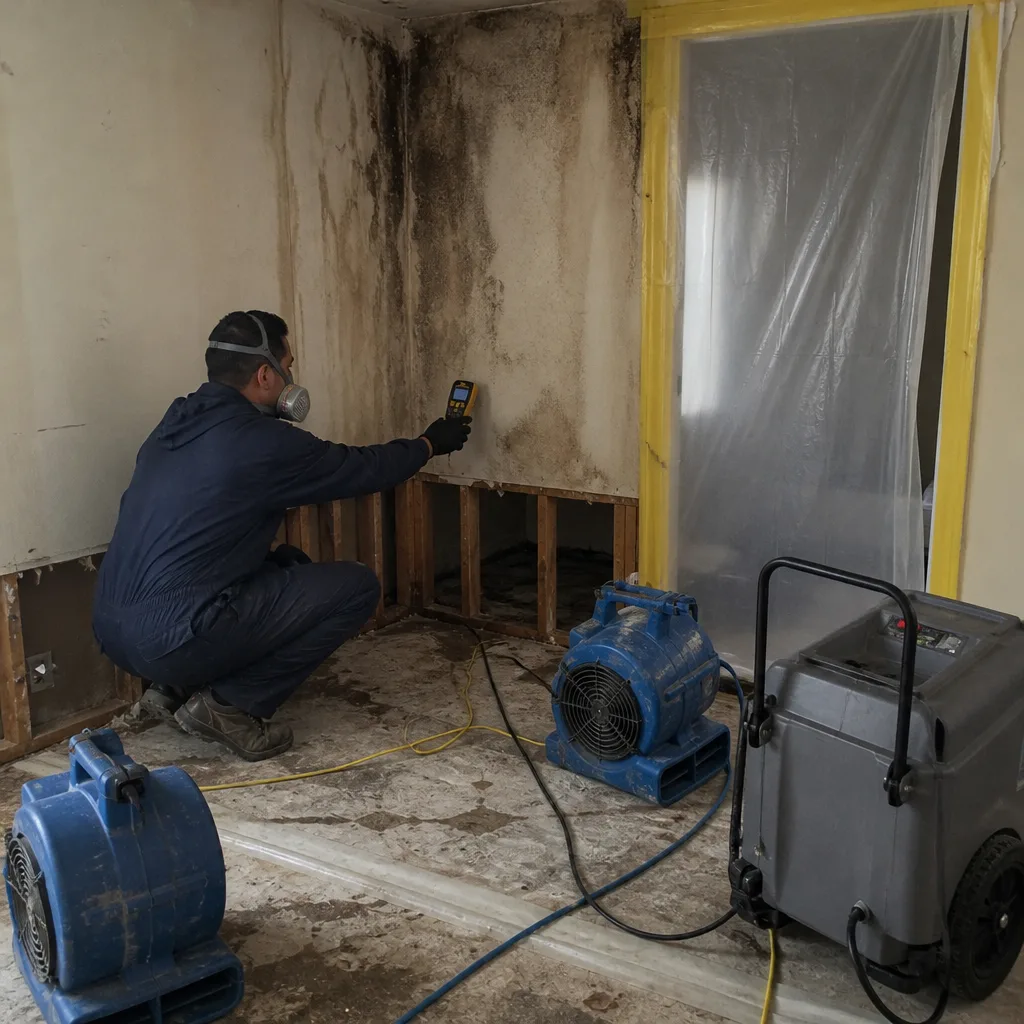 Before
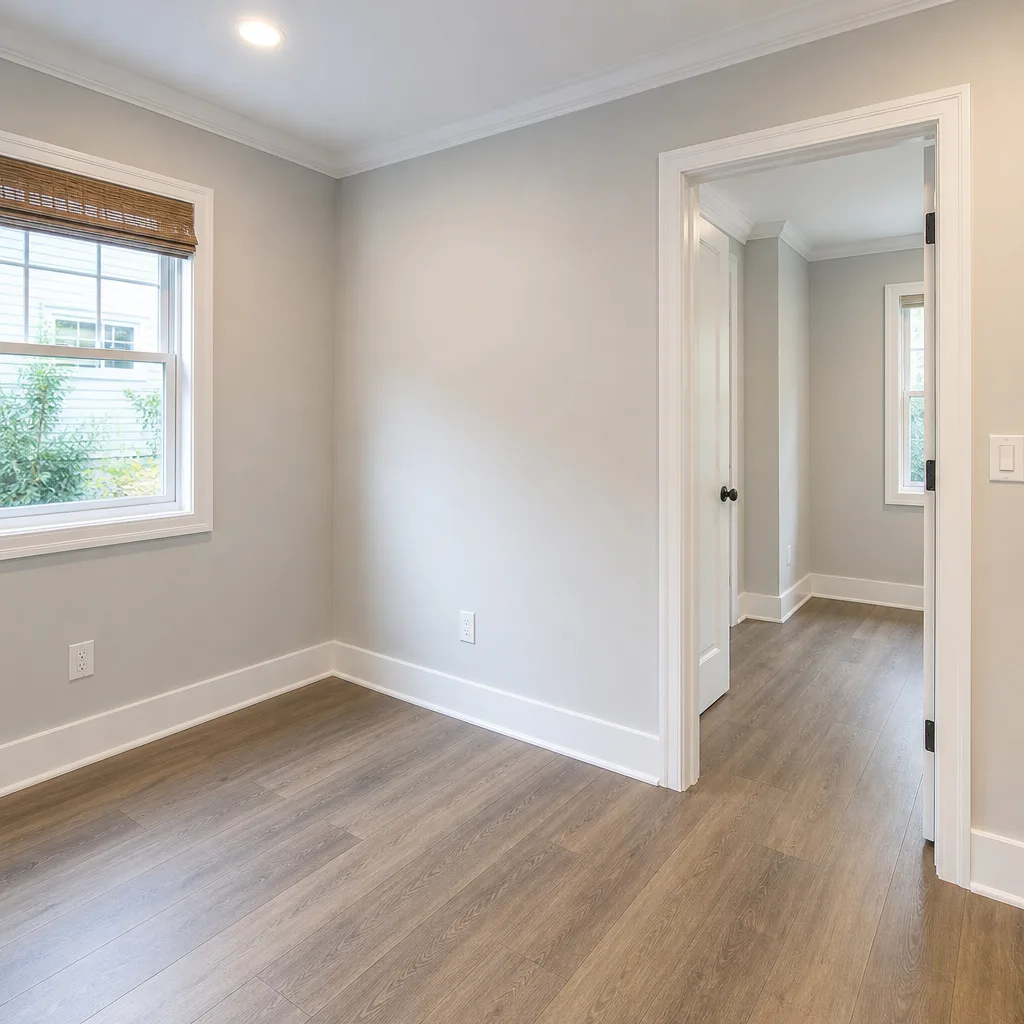 After
AfterHow Much Does Fire & Smoke Damage Restoration Cost in Pasadena?
Most Pasadena homeowners pay between $2,800 and $9,500 for fire and smoke damage restoration, with the typical single-room kitchen fire landing around $4,200 to $6,800 when smoke remediation, soot cleanup, and odor removal are included. Structural repairs after larger fires can push costs to $25,000 or more depending on how far flames, heat, and smoke traveled through the home. These are real 2026 numbers for the Pasadena market, where older housing stock and tight lot lines in neighborhoods like Bungalow Heaven, Madison Heights, and the Arroyo Seco corridor affect both the damage pattern and the restoration approach.
Call (626) 657-5106 for a free estimate. We answer live, 24 hours a day. Every job gets a written price before any work begins.
Key Takeaways: Fire & Smoke Restoration Costs in Pasadena
- Typical range: $2,800 to $9,500 for most residential fire and smoke restoration projects.
- Kitchen fire (contained): $3,500 to $7,200 including soot cleanup, smoke odor removal, and cabinet restoration where salvageable.
- Whole-home smoke damage: $8,000 to $18,000 when HVAC systems, attics, and every room require treatment.
- Structural fire damage: $15,000 to $60,000+ depending on framing, electrical, and roofline involvement.
- Insurance typically covers fire restoration, subject to your deductible and policy limits. We work directly with your adjuster.
- Odor removal alone: $1,200 to $4,000 using thermal fogging or ozone treatment, depending on square footage.
If you’re dealing with the aftermath of a fire right now, start with our Fire & Smoke Damage Restoration in Pasadena guide. It explains the full process we follow, from board-up through final air quality verification.
Fire & Smoke Damage Restoration Cost Breakdown (2026)
Here’s what fire and smoke restoration actually costs in Pasadena, line by line. These aren’t national averages pulled from a database. They reflect what we see on jobs across this city, from Altadena-adjacent properties to the Craftsman homes south of the 210.
| Service | Typical Pasadena Cost Range | What’s Included |
|---|---|---|
| Soot & Smoke Cleanup | $2,500 – $7,000 | Dry sponge cleaning, HEPA vacuuming, surface wiping on walls, ceilings, and hard surfaces |
| Smoke Odor Removal | $1,200 – $4,500 | Thermal fogging, ozone treatment, or hydroxyl generation, sealed room by room |
| HVAC & Duct Cleaning | $600 – $2,200 | Duct inspection, register removal, HEPA brushing, coil and blower cleaning |
| Contents Cleaning | $1,000 – $5,000 | Ultrasonic cleaning for non-porous items, dry cleaning for textiles, ozone chamber for soft goods |
| Drywall & Insulation Removal | $1,800 – $6,500 | Cutting out charred or smoke-saturated drywall, pulling insulation, haul-off to certified disposal |
| Structural Cleaning & Sealing | $1,500 – $4,000 | Cleaning framing, applying shellac-based or oil-based sealers to block residual odor bleed-through |
| Water Damage from Firefighting | $1,500 – $6,000 | Water extraction, structural drying with Dri-Eaz and Phoenix equipment, antimicrobial application |
| Rebuild & Finish Work | $8,000 – $40,000+ | Insulation replacement, drywall installation, texturing, priming, painting, trim, and flooring |
One thing that surprises Pasadena homeowners: the water damage from the fire department’s hoses is often a bigger cost driver than the fire itself. When the PFD knocks down a kitchen fire, 200 to 500 gallons of water can end up in your floor system, cabinets, and wall cavities. That water starts wicking up drywall within minutes. We treat it as a dual loss: fire and water, addressed simultaneously so mold never gets a foothold in Pasadena’s dry, warm climate, where conditions can support fungal growth within 48 to 72 hours.
At Marsh Water Damage Pasadena, you get a written price before we start. Not an estimate that creeps upward once the drywall comes off. The number we hand you is the number we work to, and it’s printed on every work order alongside our 365-Day Done Right Promise.
What Affects Fire & Smoke Damage Restoration Pricing in Pasadena
- Fire size and burn temperature. A stovetop grease fire that scorches one wall costs far less than a slow-burning electrical fire that smolders through the attic. Hot, fast fires leave cleaner char. Cool, smoldering fires produce thick, oily soot that penetrates every porous surface and costs multiples more to remove.
- Your home’s age and construction. Pasadena’s housing stock includes thousands of pre-1950 homes with lath-and-plaster walls. Unlike modern drywall, lath-and-plaster resists cutting but absorbs smoke deeply into its multiple layers. Restoration on these homes typically runs 20% to 30% higher than on newer builds, simply because the wall assembly is harder to clean and requires more sealant.
- Where the smoke traveled. Smoke follows air currents. In a two-story Craftsman, smoke from a basement fire travels up through chases, behind built-in cabinetry, and into the attic. The broader the spread, the more square footage requires restoration, and the more likely your HVAC system pushed soot into every room.
- Contents affected. In homes with extensive book collections, upholstered furniture, rugs, and drapery, contents cleaning adds thousands. Porous materials capture smoke molecules and release them slowly. Upholstery and drapes almost always need professional cleaning or replacement after a moderate fire.
- Access constraints. Homes in the Prospect Park and Linda Vista hillside areas often present tight driveway access, narrow doorways, and elevated foundations that complicate equipment movement and disposal. That adds labor hours, which adds cost.
- Permit requirements. In Pasadena, structural repair to load-bearing walls, rooflines, or electrical systems typically requires city permits through the Pasadena Building & Safety Division. Permit fees and inspection scheduling add $500 to $2,500 to a restoration, depending on scope. If the fire damaged your electrical panel, plan on a service upgrade inspection as part of the permit package.
How Insurance Handles Fire Restoration in Pasadena
Fire is a covered peril on nearly every homeowner’s policy in California. Your insurer will typically pay for the full restoration, minus your deductible, up to your dwelling and contents limits. The restoration company bills the carrier directly in most cases.
What matters is the paperwork and the scope. A thorough scope of loss that documents every line item, every square foot of affected surface, and every piece of equipment deployed is what gets your claim paid fully. We work with adjusters from all major carriers and provide photo documentation, moisture mapping, and line-item estimates that match the language insurance companies expect. Our technicians hold IICRC, RIA, and IFA credentials, which carries weight during the claims review process, because those certifications signal to your adjuster that the work was scoped and performed to the restoration industry’s recognized standards.
What Fire & Smoke Restoration Actually Looks Like (Step by Step)
Here’s the sequence we follow on every fire job in Pasadena. It helps you understand what you’re paying for at each stage.
Step 1: Emergency Response and Board-Up
Within hours of the fire department clearing the scene, we secure the property. That means boarding broken windows, tarping the roof, and setting temporary fencing where needed. Pasadena requires that fire-damaged properties be secured against unauthorized entry, both for safety and for liability. This first visit is when our Threshold Verified protocol kicks in: the technician arriving at your door has been sent to you by name and photo before they ever ring the bell, and they’ll show a photo ID badge when you answer.
Step 2: Assessment and Written Scope
We document every affected surface. Using moisture meters and thermal imaging cameras, we map where water from firefighting has penetrated. Using LED inspection lights and chemical testing on surface residues, we determine the type of soot present. Protein soot from a kitchen fire is nearly invisible and extremely pungent. Petroleum soot from an electrical fire is black and oily. Natural soot from burning wood is gray and powdery. Each requires a different cleaning chemistry, and the scope document captures it all.
Step 3: Water Extraction and Drying
If the fire department’s water is still present, we extract it immediately using truck-mounted and portable extraction equipment. Then we set Dri-Eaz and Phoenix air movers and dehumidifiers, taking psychrometric readings (measuring the moisture in the air and materials) daily until the structure is genuinely dry, not just dry on the surface. This takes 3 to 5 days in Pasadena’s climate, which is typically warm and low-humidity, but longer when the Santa Ana winds push dry air through the structure and create hiding places for moisture in closed cavities.
Step 4: Soot Removal and Structural Cleaning
Every surface gets cleaned. Hard surfaces are dry-sponged first, then wiped with specialized soot-removal solutions. Fabrics and carpets are HEPA-vacuumed. Charred drywall and insulation are cut out and bagged. Exposed framing is cleaned and inspected for char depth. This is the most labor-intensive phase because soot embeds itself in every textured surface, and Pasadena is a city of textured walls, from Spanish plaster finishes to mid-century wood paneling.
Step 5: Odor Removal and Sealing
Smoke odor lingers because odor molecules embed in porous materials and off-gas slowly. We use thermal fogging to force odor-neutralizing compounds into the same microscopic spaces occupied by smoke molecules. For persistent odor, we use hydroxyl generators, which are safe for occupants and won’t require you to vacate the property the way ozone treatment does. Then we apply an odor-blocking sealant to any remaining framing before new drywall goes up.
Step 6: Contents Cleaning
Your dishes, cookware, books, clothing, electronics, and furniture are cleaned either on-site or at our contents processing facility. Non-porous items are ultrasonically cleaned. Soft goods are dry cleaned or laundered. Documents are freeze-dried when necessary. Every item is photographed, logged, and tracked so you know what was cleaned, what was discarded, and what was restored.
Step 7: Rebuild and Finish
We hang new drywall, tape, texture, prime, and paint. We match existing textures, which matters in Pasadena, where orange peel, knockdown, and smooth Spanish plaster finishes vary from home to home and decade to decade. Trim, cabinetry, flooring, and final paint complete the job. Then we perform a final cleaning and air quality verification.
Throughout the process, the threshold standard applies: every technician is background-checked, identity-verified, uniformed, and photo-badged. You always know who is in your home.
How to Save on Fire & Smoke Damage Restoration
Fire restoration is not where you want to cut corners, but there are legitimate ways to keep costs down without compromising the outcome.
- File your insurance claim immediately. The longer you wait, the more smoke residue cures into surfaces and the more expensive removal becomes. Soot turns from cleanable to permanent within days on painted surfaces.
- Don’t attempt DIY surface cleaning before the adjuster sees the damage. Improper wiping can smear soot deeper into paint and drywall, turning a $500 cleanup into a $2,000 replacement. More importantly, your adjuster needs to see the full extent of the loss to approve the scope you’re entitled to.
- Document everything. Take photos and video of every room, every wall, every piece of furniture before any cleaning begins. Walk through with your phone recording. This documentation supports your claim and prevents disputes later.
- Ask about contents restoration vs. replacement. Cleaning a sofa or a set of drapes is almost always cheaper than replacing them. We’ll tell you honestly which items are worth cleaning and which are beyond salvage.
- Work with a company that provides a written scope before work starts. When the price is written down before any walls are opened, you avoid the ballooning costs that come from vague scopes and undefined contingency lines. At Marsh Water Damage Pasadena, you get a written price before any work begins, and our 365-Day Done Right Promise means any repair that doesn’t hold within a year gets fixed at no cost to you, with a free second visit included automatically. Call (626) 657-5106 for a free estimate.
FAQs – Fire & Smoke Damage Restoration Cost
How much does it cost to clean soot and smoke from a house in Pasadena?
Expect to pay between $2,500 and $7,000 for soot and smoke cleanup across a typical Pasadena home, depending on square footage and how far the smoke traveled. A contained kitchen fire affecting two or three rooms runs on the lower end. Smoke that penetrated the attic, HVAC system, and every bedroom runs higher. Call (626) 657-5106 for an exact quote, and we’ll come out to assess the damage free of charge.
Is it cheaper to repair fire damage or replace everything?
In most cases, restoration is 40% to 60% cheaper than full replacement. Cleaning and sealing existing framing, subfloor, and cabinetry costs less than tearing everything out and rebuilding. That said, there are thresholds: drywall with char deeper than a quarter inch, insulation that absorbed smoke odor, and any electrical component exposed to heat generally should be replaced. Our technicians follow IICRC and RIA guidance on which materials can be salvaged and which cannot, and we’ll tell you straight.
How much does smoke odor removal cost in Pasadena?
Standalone smoke odor removal in Pasadena runs between $1,200 and $4,500. The spread depends on whether you need thermal fogging alone or hydroxyl treatments across multiple rooms, plus the size of your HVAC system if ducts need cleaning. In homes where smoke penetrated wall cavities and underfloor spaces, the cost leans higher because the odor is hiding in places you can’t see. Call (626) 657-5106 and we’ll assess the source of the odor before quoting, so you know exactly what you’re paying for.
Does homeowners insurance cover fire and smoke damage restoration?
Yes, fire is a covered peril on standard California homeowners policies. Your insurer pays for restoration costs above your deductible, up to policy limits. The key is accurate scope documentation. A restoration company that uses the same estimating software and standards your adjuster recognizes makes the claims process smoother. Marsh Water Damage Pasadena has worked with adjusters across the San Gabriel Valley since 2005, and we document every line item to IICRC and RIA standards.
Can you start fire restoration the same day in Pasadena?
Yes. Our emergency response team is available 24 hours a day, 7 days a week, and a live person answers every call, including holidays. For a fire that happened today, we can typically be on-site within hours to board up, secure the property, and begin water extraction if the fire department left standing water. The faster restoration begins, the less soot cures into surfaces and the lower your final cost will be. Call (626) 657-5106.
How long does fire damage restoration take in Pasadena?
A contained kitchen fire with moderate smoke damage typically takes 2 to 4 weeks from board-up to final paint. A whole-home fire with structural damage takes 2 to 6 months, depending on permit reviews from Pasadena Building & Safety and the availability of specialized trades. We’ll give you a written timeline during the scoping phase, and we hold to it. Our 365-Day Done Right Promise starts on the day we finish, not the day we start.
Why Pasadena Homeowners Choose Marsh Water Damage Restoration
A marsh is low, wet ground, water where it shouldn’t be. That’s the problem our company was built to solve, and fire restoration is part of that same unwelcome water story. Fire damage always brings water damage, and Pasadena’s homes, with their mix of 1920s plaster, 1950s ranch layouts, and hillside foundations, present unique challenges that require local knowledge.
We’ve been operating in Pasadena since 2005 as part of the Threshold Group family of restoration companies. Our technicians hold IICRC, RIA, and IFA credentials. We use the same equipment deployed on large commercial losses: Dri-Eaz dehumidifiers, Phoenix air movers, XPOWER ventilation, B-Air filtration, and Injectidry systems for in-place drying of walls and flooring. That’s not marketing language. It’s the gear in the truck that backs into your driveway.
The difference you’ll feel is the Threshold Standard. Before a technician arrives at your home, you get their name and photo. When they knock, they show a photo ID badge. Every time. It matters when you’re dealing with a traumatic event like a fire, and it matters if you’re home alone, juggling kids, or helping an aging parent through the loss of their home. You don’t have to wonder who you’re letting in.
We invite you to read more about our fire restoration process on our Fire & Smoke Damage Restoration in Pasadena page, or return to our home page to see the full range of services we provide. When you’re ready to talk, call (626) 657-5106. A live person answers. Every time.
Pricing reflects the Pasadena market as of 2026. Marsh Water Damage Pasadena offers free estimates – call (626) 657-5106.
Written by Tobias Reyner, Owner at Marsh Water Damage Pasadena, serving Pasadena since 2005.
What Our Customers Say
"Solid crew and a good drying job. The first day the tech was late because of another job, but the crew was thorough once they arrived."
- Marco V."They explained the whole drying plan on paper first, and the estimate matched the invoice. Pulled wet baseboards and cut out only what was needed."
- Terrence H."Daily moisture readings were shared on my phone, so I knew when the drying was done. No surprises."
- Fiona K.