
 Water damage drying
 Fire & smoke cleanup
 Mold remediation
 Storm response
 Sewage cleanup
 Reconstruction
Free visual inspection and a written scope of work before any mitigation begins - photos, moisture readings, and drying logs go in your claim file
The scope we write is the scope we bill. Anything new gets shown to you, in writing, before we touch it.
Get your free estimateFast, Reliable Storm Damage Restoration Across Downtown Los Angeles
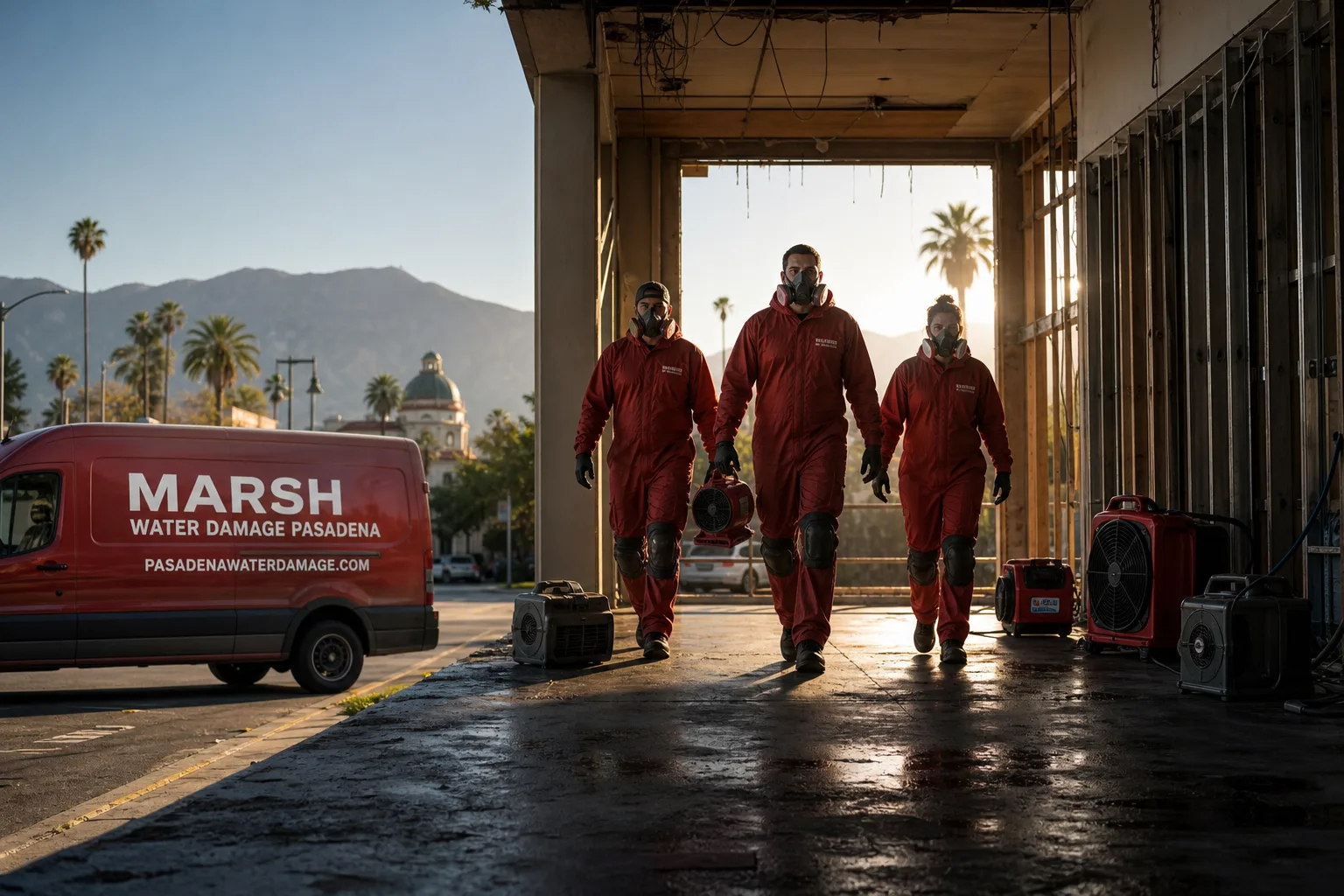
Storm damage in Downtown Los Angeles moves differently than it does in the suburbs. A winter storm that sends rain sideways against a 1920s masonry high-rise doesn’t just wet a roof, it forces water through original steel-frame windows, down interior walls, and into post-tensioned concrete slabs that hide moisture for weeks. We know because we’re here, responding to lofts in the Historic Core, the Arts District, and South Park, often within 60 to 90 minutes of your call. Marsh Water Damage Pasadena has specialized equipment and technicians who understand adaptive-reuse buildings, because Downtown Los Angeles isn’t like anywhere else in the county. If water just came through a window or a ceiling on Spring Street, Main Street, or Grand Avenue, call (626) 657-5106. A live person answers, day or night. We’ll tell you exactly who’s coming, before they knock.
Why Marsh Water Damage Pasadena Is Downtown Los Angeles’s Preferred Storm Damage Restoration Company
Downtown Los Angeles residents deal with a specific kind of anxiety after a storm. It’s not just the water. It’s the question of who shows up at your door in a building where security is everything, where the front desk doesn’t let just anyone upstairs, and where you might be home alone at 11 p.m. staring at a growing watermark on the ceiling. We built our process around that second fear. Every technician who arrives at your loft or condo is background-checked, identity-verified, and sent to you by name and photo before the visit. They show a photo ID badge at your door. That’s the Threshold Standard, and it’s not a marketing phrase. It’s five steps: verify identity, background check, uniform, photo badge, and advance notification with name and face. Every time, on every job.
Our crews know the loading docks on 7th Street, the alley-only access behind Broadway, and the freight elevator schedules that govern buildings near Bunker Hill. We know that a storm restoration job in a converted loft on Spring Street means coordinating with building security before we ever roll a dehumidifier through the lobby. We’ve done it hundreds of times since 2005, which is when Marsh Water Damage Restoration was founded as part of the Threshold Group family. Our technicians hold IICRC, RIA, and IFA credentials, and they run equipment from Dri-Eaz, Phoenix, XPOWER, B-Air, and Injectidry. The same gear used on major commercial losses, sized down for compact residential floor plans.
Restoration work we handle
Storm Damage Contractors in Downtown Los Angeles
Storm Damage Contractors in Downtown Los Angeles do more than haul out wet drywall. In this city’s building stock, storm restoration means navigating strict seismic retrofitting requirements and historic preservation guidelines. A contractor who doesn’t understand adaptive-reuse construction can easily cut into a post-tensioned concrete slab and hit a tension cable, or trigger a stop-work order from the city’s preservation office. The work involves water extraction, structural drying, moisture mapping, and selective demolition, all done with care for the building’s original features. Most storm damage contractor work in Downtown Los Angeles runs between $2,800 and $7,500 depending on how many rooms are affected and how far the water traveled through the slab. The Storm Damage Restoration team at Marsh handles the full scope, from initial assessment to final reconstruction, with a written price before any work starts.
Containment and Structural Drying
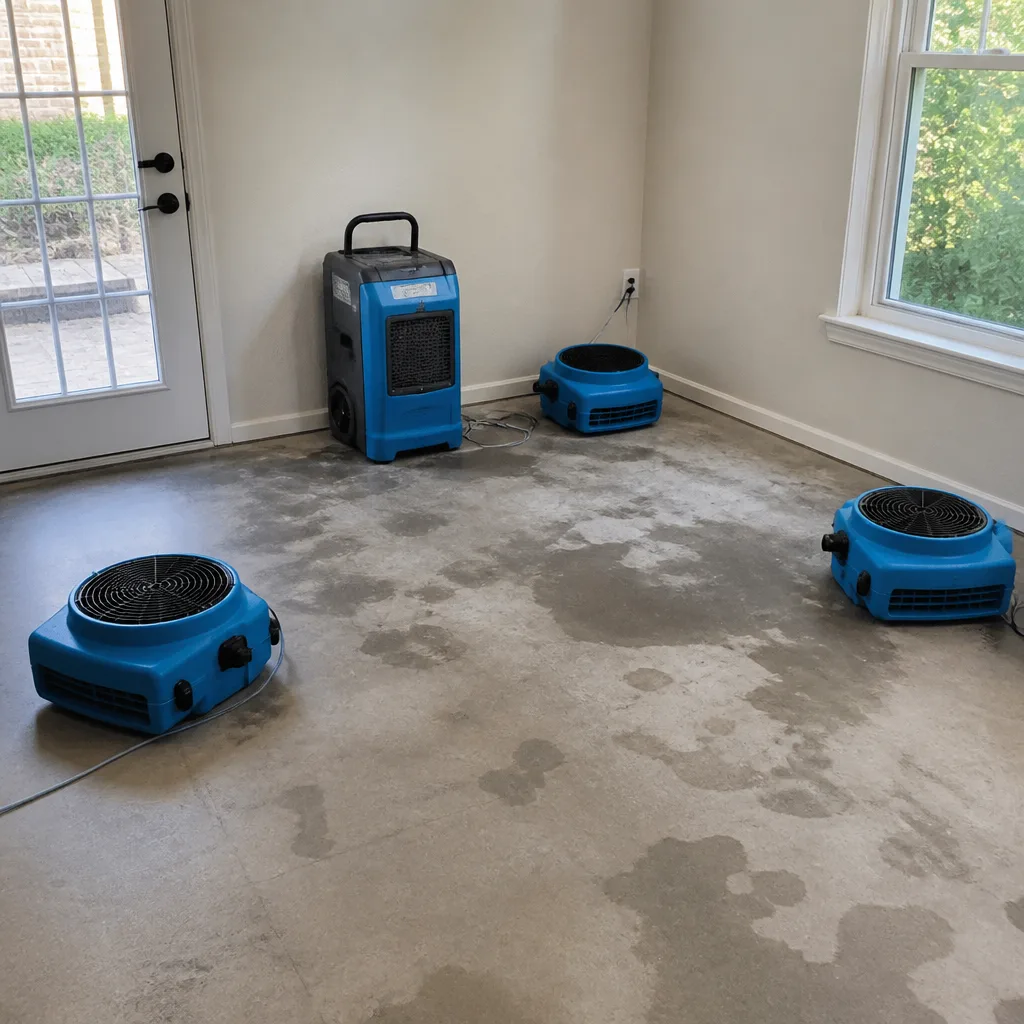
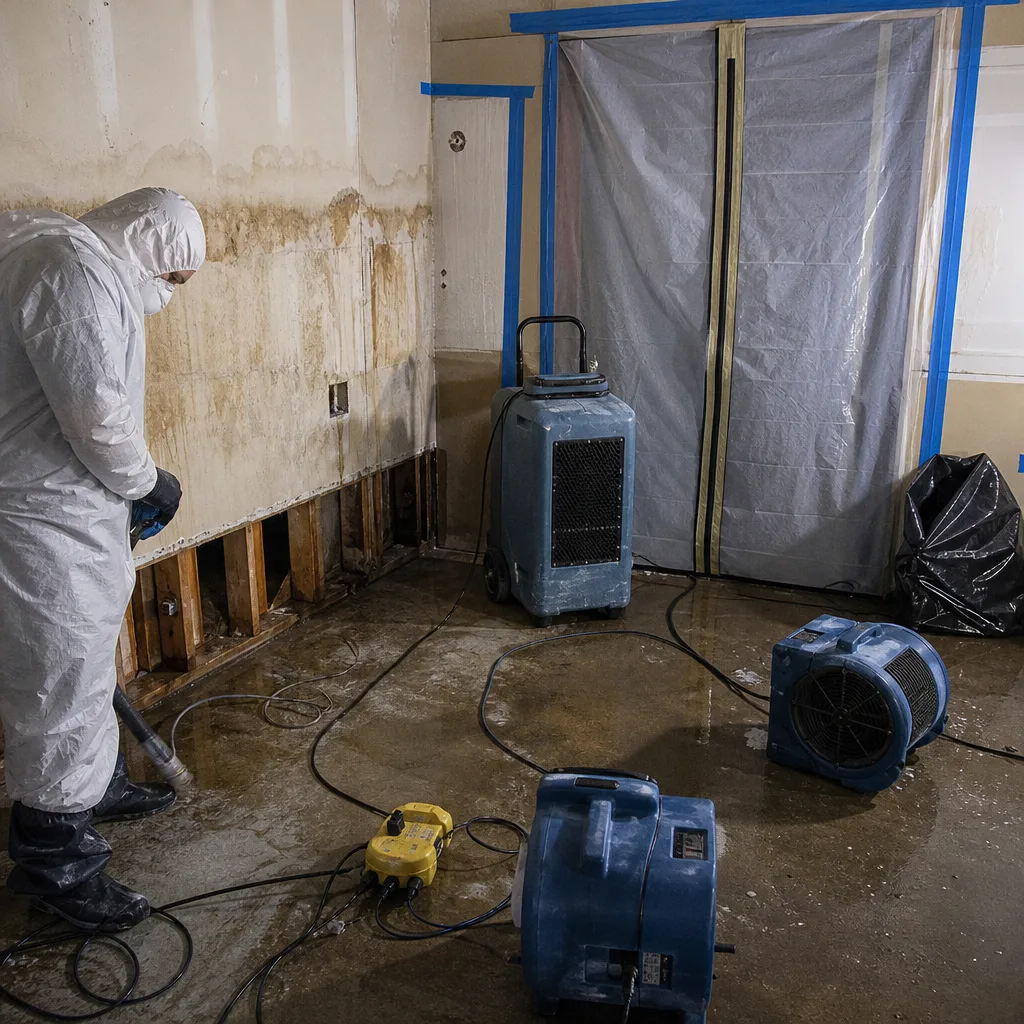
Once we have the intrusion mapped, we set up containment to keep dust and moisture from spreading through your loft or into neighboring units. We use compact, high-velocity air movers and low-profile dehumidifiers that fit through narrow doorways and don’t require a freight elevator. Post-tensioned concrete slabs in Downtown Los Angeles high-rises hold water differently than wood subfloors. Drying them requires thermal imaging to locate trapped moisture and psychrometric readings, meaning we measure the moisture in the air, to confirm the structure is genuinely dry, not just dry on the surface.
Window and Envelope Repairs
Original single-pane steel windows are beautiful and also porous. After a winter storm, we routinely find water that entered through the frames, ran down inside the wall cavity, and pooled at the baseboard or under the floor. Repairing the storm damage often means sealing the window frame, drying the surrounding wall, and replacing damaged drywall and insulation. We’ll also document everything for your insurance carrier, because this kind of water intrusion usually falls under covered storm damage.
Storm Damage Cleanup in Downtown Los Angeles
Storm Damage Cleanup in Downtown Los Angeles covers everything after the water stops coming in: extracting standing water, removing wet drywall and insulation, hauling out debris, sanitizing surfaces, and setting up drying equipment. In a high-rise, this work usually has to happen fast, because water that sits in a converted loft on an upper floor can drip down into the unit below within hours. Most storm damage cleanup in Downtown Los Angeles runs $1,800 to $5,200 for a typical one-to-two-room intrusion. It goes higher when the water traveled through a slab and into lower floors. We coordinate with building management and security for after-hours access, because the 24-to-48-hour window when mold can begin on wet drywall doesn’t wait for the front desk to open.
Alley-Load and Tight-Access Cleanup
Buildings in the Historic Core and the Arts District often have alley-only loading. That means no street parking, no lobby staging, and no wide doorways. Our crews use compact equipment and hand-carry materials in through service entrances. We’ve handled cleanups where every piece of equipment went up a fire escape stairwell because the freight elevator was down. It’s slow work, but it’s the only way to do it right without violating building rules.
Documentation for Your Insurance Claim
We photograph everything. The water stain on the ceiling, the moisture readings, the equipment we set, the damaged drywall before and after removal. We work directly with your adjuster and provide a written scope and drying log. If your carrier needs a second opinion, our technicians can walk them through the readings. Storm damage claims move faster when the documentation is complete from day one.
Trusted Brands We Service in Downtown Los Angeles
Most Downtown Los Angeles storm damage jobs involve fixtures and systems that were installed during the adaptive-reuse conversion, often decades ago. We service and repair the equipment found in these older buildings, including Dri-Eaz dehumidifiers, Phoenix air movers, and B-Air dryers that property managers may already have on site. If your building owns its own mitigation equipment, we can inspect it, test it, and get it back into service. We also stock common replacement parts locally, which means when a dehumidifier fails in the middle of a drying job, we can usually swap it out the same day instead of waiting on a shipment. Injectidry systems are available for hard-to-dry wall cavities that standard equipment can’t reach.
Common Storm Damage Restoration Problems We See in Downtown Los Angeles Homes
- Water traveling through post-tensioned concrete slabs: In converted high-rises, water that pools on a loft floor can travel through cracks and gaps in the slab and damage the unit below. We routinely find hidden damage one or two floors down before the original leak is even visible.
- Original single-pane steel windows leaking during heavy rain: The Historic Core’s converted lofts often keep their original steel-frame windows. They look great and they leak. Rain driven by winter storms penetrates the frame, runs inside the wall, and damages interior finishes without showing a puddle on the floor.
- Noise and access restrictions on drying equipment: Downtown Los Angeles buildings have noise ordinances and tight loading docks. Loud, bulky air movers can trigger complaints or simply not fit through the service entrance. We use compact, high-velocity units that run quieter and fit through narrow doors.
- Delayed discovery in vacant or part-time units: Many Downtown Los Angeles lofts are second homes or pied-à-terre. When a storm leaks through an unoccupied unit, the damage can sit for days or weeks before anyone notices. By the time we’re called, the drywall is often fully saturated and mold is already active.
See the difference
 Before
 After
After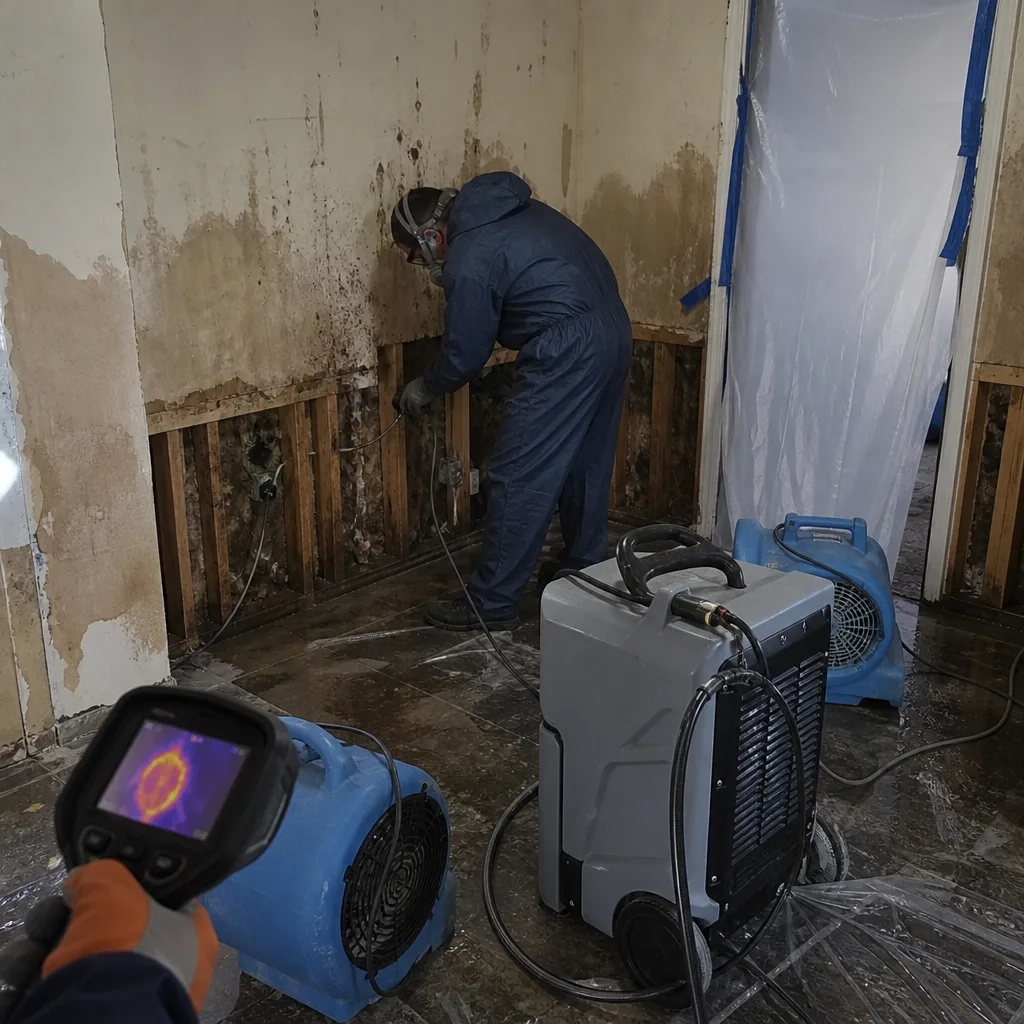 Before
 After
After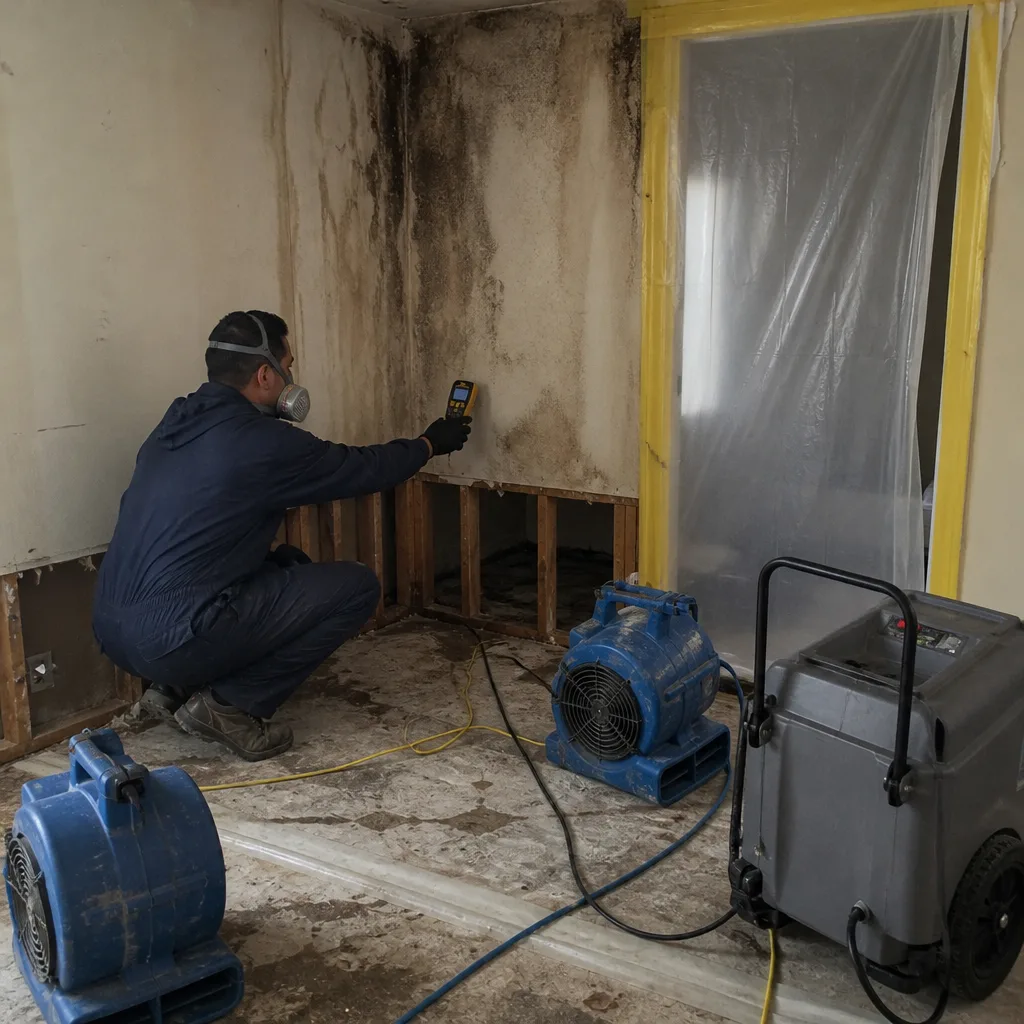 Before
 After
AfterPricing for Storm Damage Restoration in Downtown Los Angeles, CA
We Also Serve Cities Near Downtown Los Angeles
While this page covers Downtown Los Angeles storm damage work, our crews also respond across the surrounding area. We serve Pasadena, Glendale, Arcadia, and Monrovia with the same Threshold Verified technicians, the same equipment, and the same written-price guarantee. If you’re in one of those cities and dealing with water that came through a window, ceiling, or wall, call the same number: (626) 657-5106.
Serving Downtown Los Angeles, CA - Our Local Coverage Area
We’re based in the Downtown Los Angeles area and know this community well. Use the map below to see our service coverage - if you’re nearby, we can almost certainly help.
FAQs About Storm Damage Restoration in Downtown Los Angeles
Storm water in Downtown Los Angeles high-rises often travels through post-tensioned concrete slabs and inside wall cavities, where it saturates drywall and insulation without ever showing a visible puddle on the floor. By the time a stain appears on a ceiling or baseboard, the damage below the surface is already extensive. If you suspect a leak, call (626) 657-5106 and we’ll bring thermal imaging to find it before it spreads.
Rainwater from a window leak is generally Category 1 water, meaning it came from a sanitary source. However, once it runs through a 100-year-old wall cavity, picks up dust, and sits for days, it can quickly degrade to Category 2 or 3. That classification changes how we handle the cleanup and what materials need to come out. We assess the water category on every job and document it for your insurance carrier.
You don’t drill into the slab at all. We use surface drying with low-profile air movers and dehumidifiers, and we map the moisture with thermal imaging to see exactly where the water is. Post-tensioned cables are under enormous tension, and cutting into one can cause catastrophic failure. Our technicians are trained to identify post-tensioned construction and work around it. It’s non-invasive, and it’s the only safe way to dry these slabs.
Yes. Our crews regularly work in Downtown Los Angeles buildings with alley-only loading, freight elevator restrictions, and no street parking. We hand-carry compact equipment through service entrances and coordinate access with building security and management before we arrive. We’ll tell you exactly when we’re coming and who’s coming, so you can clear it with the front desk.
It can, depending on your building’s designation and the scope of the work. Repairs inside your unit that don’t change the building’s exterior or structural system are usually fine. But work that touches original windows, exterior walls, or common areas may need approval from the city’s preservation office or your HOA’s architectural committee. We’ll flag that early and coordinate with building management so your restoration doesn’t stall. Call (626) 657-5106 and we’ll walk you through what your specific building requires.
We Know Downtown Los Angeles Buildings, and We Know Who’s Knocking
A storm blows through, and you’re standing in a loft with water on the floor, original steel windows rattling in the wind, and no idea how deep the damage goes. We’ve stood in that exact room. Our crew responded to a converted loft on Spring Street after a winter storm drove rain through the original steel-frame windows. We set up containment, mapped moisture with thermal imaging, and placed Dri-Eaz dehumidifiers and air movers in the tight floor plan to dry the post-tensioned concrete slab and protect the refinished hardwood before hidden damage could spread to the unit below. That’s the job. The Marsh name comes from low, wet ground, water where it shouldn’t be. Downtown Los Angeles gives us plenty of that.
Every Marsh job in Downtown Los Angeles comes with a written price before work starts, a written guarantee on every repair, and the 365-Day Done Right Promise: if the repair is not right within a full year, we make it right. A free second visit is included automatically, not something you have to argue for. Call (626) 657-5106 now. A live person answers. We’ll send you a name and a photo before we arrive. You’ll know exactly who’s coming to your door in Downtown Los Angeles.
Written by Tobias Reyner, Owner at Marsh Water Damage Pasadena, coordinating storm damage restoration across Downtown Los Angeles since 2005.